As-Sirat: What happens before and after the bridge over Jahannam?
October 15, 2026
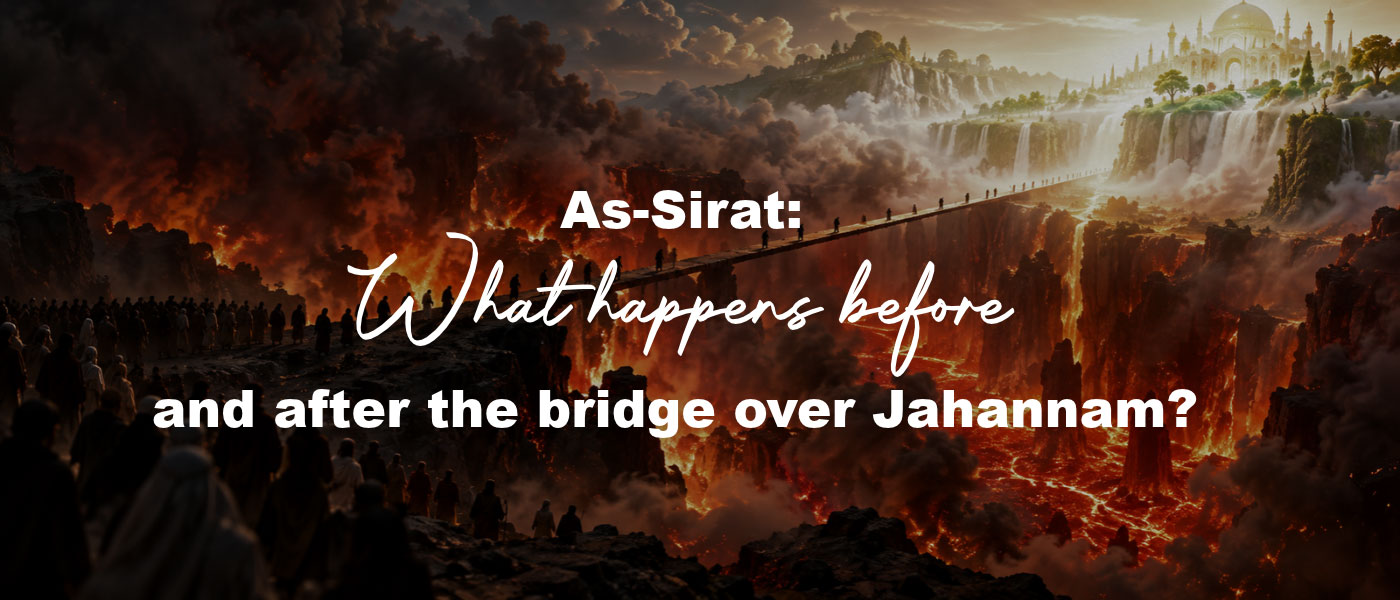
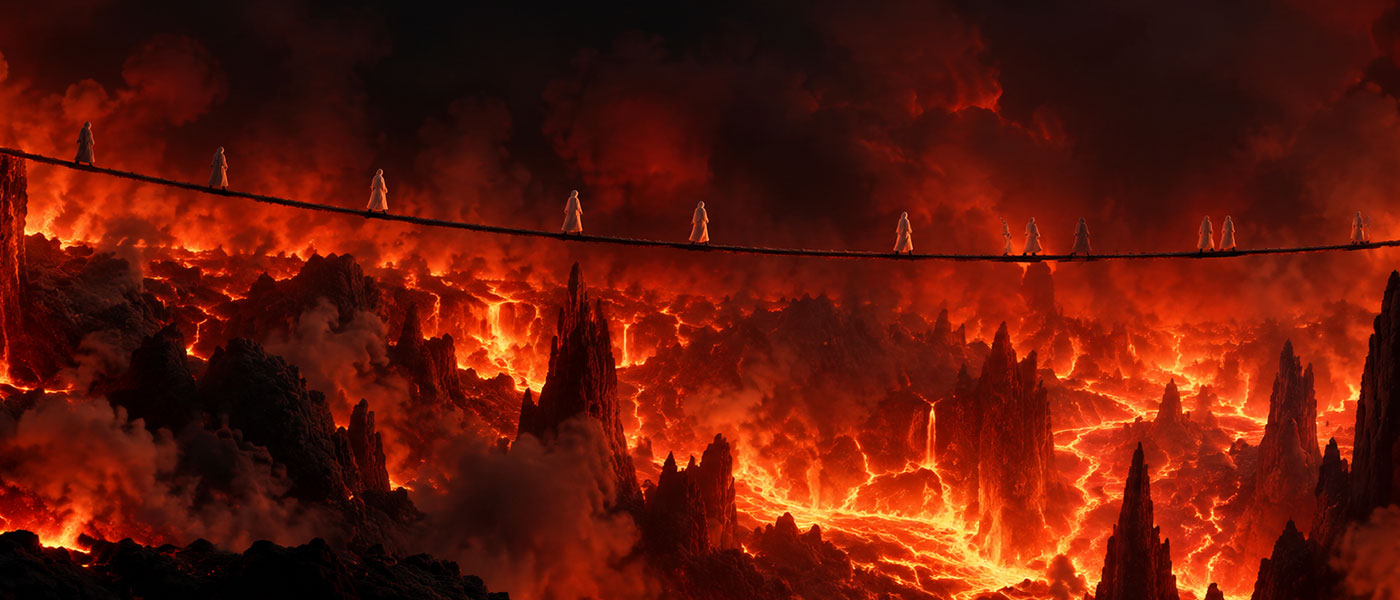
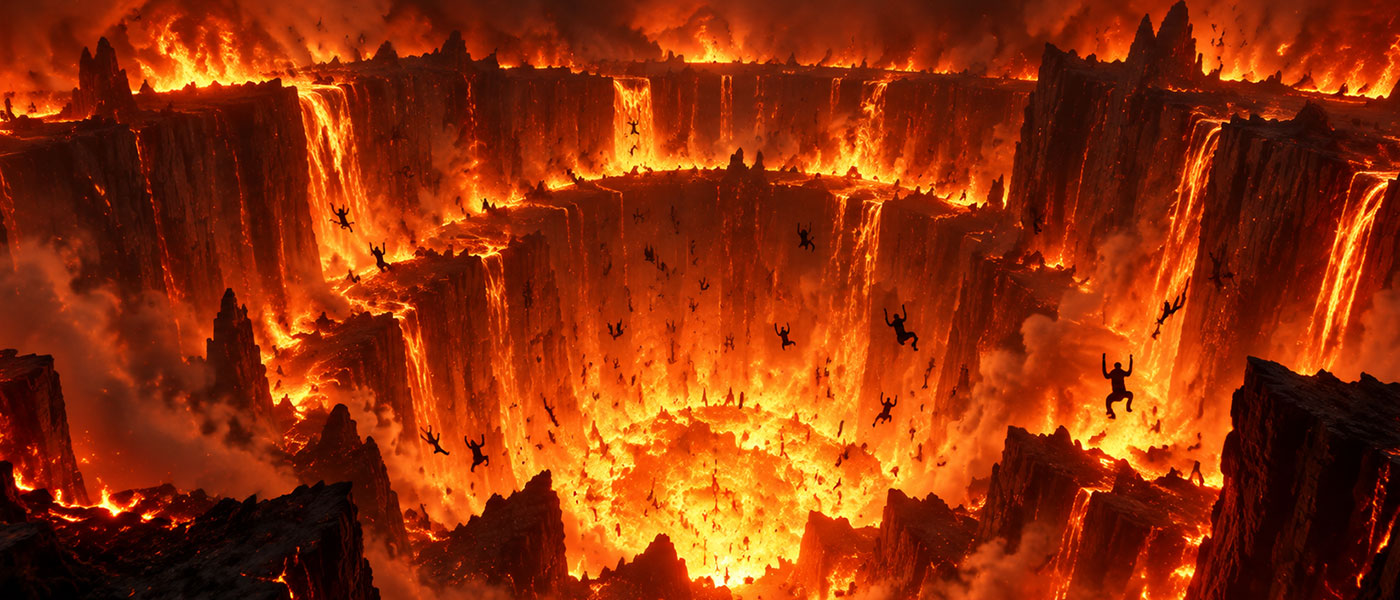
Did you know that there is a bridge that no engineer could ever design, no human being could ever test, and no amount of worldly preparation could teach someone how to cross? It is not built to connect two cities or shorten a difficult journey. It will be placed over Jahannam, and those who must cross it will discover that the strength of their legs has very little to do with how quickly they reach the other side. The Prophet Muhammad (SAW) described people crossing this bridge like flashes of lightning, while others will struggle forward, some escaping with injuries and others falling into the Fire. Perhaps the most astonishing part of this account is that people who once walked upon the same earth, lived beneath the same sky, and were given opportunities to worship the same Creator will experience this crossing in dramatically different ways. Known as As-Sirat, this bridge is among the most extraordinary realities of the Hereafter described in authentic Islamic teachings.
It is recorded in Sahih Muslim that, while recounting the Day of Judgment, the Prophet Muhammad (SAW) said, “…a bridge would be set over the Hell and I and my Ummah would be the first to pass over it; and none but the messengers would speak on that day, and the prayer of the messengers on that day would be: ‘O Allah! grant safety, grant safety.’” These are not details introduced to make an account of the Day of Judgment sound more frightening. They are descriptions preserved in authentic narrations, offering us a glimpse into an event that lies beyond anything we have experienced or can fully comprehend.
What makes As-Sirat compelling is the relationship between a person’s earthly life and their experience upon it. We tend to think of our actions as individual moments, a prayer performed, a lie told, a promise fulfilled, or an injustice committed. Once those moments pass, we often move on without giving them much thought. Yet the Prophet (SAW) explained that people would cross As-Sirat according to their deeds. Actions that appeared insignificant during a lifetime may take on an entirely different importance when a person stands before the consequences of what they have done. The question is no longer how successfully someone managed their affairs in the dunya, but what they have prepared for the akhirah.
For generations, Muslims have heard descriptions of As-Sirat, including the famous characterization of a bridge thinner than a hair and sharper than a sword. However, what do our Islamic sources actually establish about its appearance, the order of events surrounding it, and the fate of those who attempt to cross? Will every person be required to pass over it? What determines the different speeds at which people travel? And what happens after someone reaches safety? The answers reveal that As-Sirat is a far more frightening detail of the Day of Judgment. It is a subject that brings together divine justice, human accountability, the mercy of Allah (SWT), and the ultimate consequences of how we choose to live.
What is As-Sirat, and is it mentioned in The Quran?
One of the most interesting questions surrounding As-Sirat is whether Allah (SWT) mentions it directly in The Quran. While the term As-Sirat appears throughout The Quran in reference to a path or way, the scripture does not explicitly identify a bridge over Jahannam by that name. Instead, scholars have connected the crossing to two particularly significant verses in Surah Maryam.
Allah (SWT) says, “There is none of you who will not pass over it. This is a decree your Lord must fulfill. Then We will deliver those who were devout, leaving the wrongdoers there on their knees.” (The Clear Quran®, 19:71-72) These verses have been the subject of extensive discussion among Quranic commentators, particularly because of what they reveal about humanity’s encounter with Hellfire.
At the center of this discussion is the Arabic word wurud, which appears in verse 71. The word has been understood by scholars in several ways, including approaching, entering, or passing over something. This distinction matters because it raises an important theological question—does the verse indicate that everyone will enter Jahannam, or that they will pass over it without necessarily entering the Fire? Scholars such as Ibn Kathir and Al-Tabari recorded different interpretations, including the understanding that the verse refers to crossing over Hell upon As-Sirat. The following verse, however, makes an essential distinction by stating that Allah (SWT) will rescue those who possessed taqwa, while the wrongdoers will be left behind. The hadith literature provides further information about the bridge itself. In Sahih Bukhari, the Prophet (SAW) compares its hooks to the thorns of As-Sa’dan, a plant known to the Arabs for its curved, sharp projections. This comparison would have been familiar to their companions, allowing them to understand the nature of the hooks through something they had encountered in their everyday surroundings. It is an example of how the Prophet (SAW) explained an otherwise unimaginable reality using descriptions his audience could recognize.
These sources also demonstrate why it is important to distinguish between established Islamic teachings and descriptions that have become popular through storytelling. For example, the widely repeated characterization of As-Sirat as being thinner than a hair and sharper than a sword is found in early Islamic reports, but its attribution and authenticity require more careful discussion than the descriptions preserved in rigorously authenticated Prophetic narrations. By examining these distinctions, we can develop a more accurate understanding of As-Sirat without confusing scholarly interpretations with statements explicitly made by the Prophet Muhammad (SAW).
Who will cross As-Sirat on the Day of Judgment?
Before As-Sirat is placed over Jahannam, humanity will undergo a separation based on whom they worshipped during their earthly lives. In a detailed narration recorded in Sahih Muslim, Prophet Muhammad (SAW) explained that people will be commanded to follow what they had worshiped. Those who devoted themselves to false deities will follow them, leaving behind those who worshipped Allah (SWT). Among those remaining will be both righteous believers and people whose faith was accompanied by serious wrongdoing. This distinction is important because the narrations do not describe the crossing as an event in which all of humanity simply approaches the bridge together. Instead, it takes place after different groups have already been separated according to their worship and beliefs.
One of the most remarkable details concerning this stage of the Hereafter is the light that will be granted to the believers. Allah (SWT) describes a scene in which hypocritical men and women call out to the believers, desperately asking to share in their light. Allah (SWT) says, “On that Day hypocrite men and women will beg the believers, ‘Wait for us so that we may have some of your light.’ It will be said mockingly, ‘Go back to the world and seek a light there!’ Then a separating wall with a gate will be erected between them. On the near side will be grace and on the far side will be torment.” (The Clear Quran®, 57:13)
The believers and hypocrites will then be separated by a barrier, with mercy on one side and punishment on the other. Scholars of Quranic interpretation have discussed this passage in connection with the events surrounding As-Sirat, particularly the distinction between insincere faith and outward professions of belief. The scene is striking because those who once appeared to belong to the same religious community will no longer necessarily share the same destination. The significance of this separation becomes clearer in another narration recorded in Sahih Muslim, which explains that believers and hypocrites will initially be given light. However, the light of the hypocrisy will eventually be extinguished, while the believers will continue toward safety. This detail adds an important dimension to the events surrounding As-Sirat. The hypocrites may have successfully concealed their true intentions from others during their earthly lives, but on the Day of Judgment, the distinction between genuine faith and religious pretence will become unmistakable. The light they once appeared to possess will no longer accompany them, and the people they previously stood beside will be beyond their reach.
Al-Qantarah—the final stop before entering Jannah
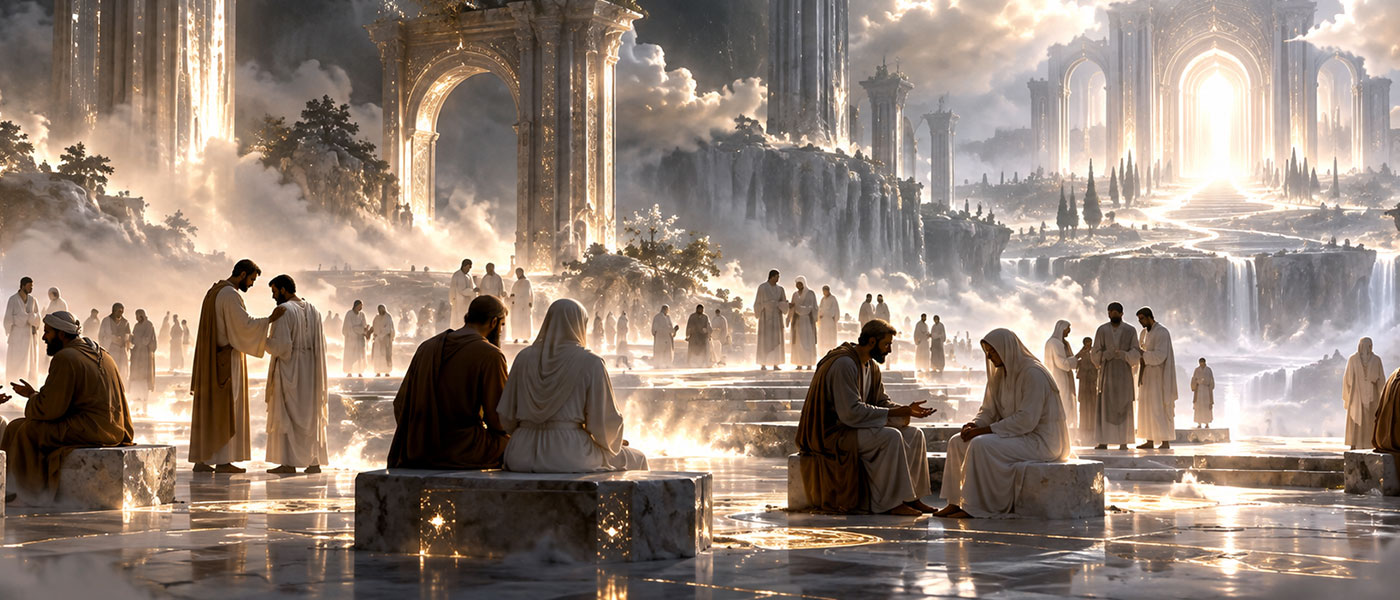
What if a person successfully crosses As-Sirat, escapes the dangers of Jahannam, and discovers that she or he still cannot enter Jannah? According to an authentic narration, there is another stage awaiting the believers before they are granted entry into Paradise. It is known as Al-Qantarah, a place between Jahannam and Jannah where unresolved injustices between believers will be settled. This is one of the lesser-known events of the Hereafter, and its significance lies in something many people may not expect. Even after escaping the Fire, believers may still have outstanding matters to resolve with those they wronged during their earthly lives.
In a hadith narrated by Abu Sai’d Al-Khudri (ra), the Prophet Muhammad (SAW) explained, “When the believers pass safely over (the bridge across) Hell, they will be stopped at a bridge in between Hell and Paradise where they will retaliate upon each other for the injustices done among them in the world, and when they get purified of all their sins, they will be admitted into Paradise.” (Sahih Bukhari) The narration establishes that crossing As-Sirat and entering Jannah are not necessarily consecutive events. Before entering Paradise, the believers will undergo a final process of settling grievances and purification, ensuring that injustices committed between them are not simply left unresolved.
Consider the implications of this account. A person may have fulfilled their religious obligations and performed countless acts of worship, yet still have wronged another believer through dishonesty, betrayal, mistreatment, or withholding something that rightfully belonged to them. Such matters are not automatically dismissed simply because both individuals have been granted salvation from Jahannam. At Al-Qantarah, justice will be established between those who were wronged and those responsible for wronging them. The hadith does not explain the precise mechanics of this settlement, but it makes clear that the process will continue until the believers have been purified and prepared for entry into Paradise.
The narration concludes with a particularly beautiful detail. The Prophet (SAW) swore by Allah (SWT) that the believers would recognize their dwellings in Jannah even better than they recognized their homes in the dunya. After the settlement of their grievances, they will be permitted to enter a place where their homes are already known to them. Al-Qantarah therefore represents something remarkable about the nature of Paradise. Its inhabitants will not enter carrying unresolved claims of injustice against one another. The relationships damaged during their earthly lives will have undergone a final reckoning, and the believers will enter Jannah only after this purification has taken place.
The River of Life—what happens to those rescued from Jahannam?
Among the extraordinary descriptions of the akhirah is the account of a river that will restore people whose bodies have been severely burned by the Fire. Known as Nahr Al-Hayat, or the River of Life, it is mentioned in authentic narrations describing what happens to certain individuals after they are removed from Jahannam. The Prophet Muhammad (SAW) explained that some of those brought out of the Fire will have been burned so severely that they resemble charcoal. Their condition will be unlike anything we associate with ordinary human survival, yet their story will not end in that state. They will be placed into a river through which Allah (SWT) will bring about their restoration. In a narration recorded in Sahih al-Bukhari, the Prophet (SAW) compared their recovery to the growth of a seed beside a stream after heavy rainfall. It is a remarkably specific comparison. When floodwaters recede, they leave behind moist soil where new plants can begin to emerge. The Prophet (SAW) drew upon this familiar natural process to describe how those placed in the River of Life will be restored. What had been severely burned will be renewed, demonstrating a transformation that cannot be explained through the physical laws governing life in this world.
Another narration in Sahih Muslim provides an additional detail about their appearance after this restoration. The Prophet (SAW) described them emerging like pearls, with identifying marks upon their necks. The inhabitants of Jannah will recognize them as people whom Allah (SWT) has freed from the Fire and admitted into Paradise. Their arrival will therefore be accompanied by a recognition of what they have experienced and the extraordinary transformation that has taken place. The account concludes with a conversation between Allah (SWT) and these newly admitted inhabitants of Paradise. When they are granted its blessings, they will express their astonishment at what they have received. Allah (SWT) will then inform them that something even greater awaits—His pleasure, and the assurance that He (SWT) will never again be displeased with them.
It is a remarkable conclusion to an account that begins with the suffering of Jahannam and ends with the promise of permanent acceptance by Allah (SWT). Rather than describing Paradise only through its physical rewards, this narration draws attention to something even more significant— the eternal pleasure of the Creator Himself.
The life we live before we reach As-Sirat
There is something worth considering about the way Islam teaches us about the Hereafter. Allah (SWT) could have left humanity unaware of what awaits beyond death, allowing us to discover the realities of the next life only when we arrive there. Instead, through The Quran and the teachings of Prophet Muhammad (SAW), we have been given knowledge of events that no living person has witnessed. We know about As-Sirat not because we have experienced it, but because Allah (SWT), in His mercy, has allowed us to learn about it while we still have the opportunity to determine how we live.
Perhaps the greatest mistake we can make when learning about As-Sirat is to become so fascinated by the details of the crossing that we overlook the purpose of knowing about it in the first place. It is natural to wonder what the bridge looks like, how long the journey will take, or what it will feel like to stand above Jahannam. However, none of these questions should distract us from examining our own conduct. A person may spend hours listening to descriptions of the Day of Judgment and still neglect their prayers, mistreat their family, deceive others, or postpone repentance. Knowledge of the Hereafter is meant to influence how we live, not simply satisfy our curiosity about what happens after death.
Allah (SWT) says in The Quran, “O believers! Be mindful of Allah and let every soul look to what deeds it has sent forth for tomorrow. And fear Allah, for certainly Allah is All-Aware of what you do.” (The Clear Quran®, 59:18) This verse offers an important perspective on preparing for the Hereafter. The future that deserves our greatest attention is not limited to what we hope to accomplish next year or even decades from now. It includes the life awaiting us after our time in this world has ended. Preparing for that future requires more than occasional moments of fear or emotional reflection. It requires sincere repentance, consistent worship, fulfilling the rights of others, and making conscious decisions that reflect our belief in accountability before Allah (SWT).
At the same time, preparing for As-Sirat should never lead a Muslim toward hopelessness. Fear of Allah’s (SWT) punishment must be accompanied by hope in His mercy. No matter how many mistakes a person has made, the opportunity to seek forgiveness remains open while they are alive.
The Quran reminds us, “Say, O Prophet, that Allah says, ‘O My servants who have exceeded the limits against their souls! Do not lose hope in Allah’s mercy, for Allah certainly forgives all sins. He is indeed the All-Forgiving, Most Merciful.’” (The Clear Quran®, 39:53) The invitation to repentance is especially meaningful when considering the realities of the Hereafter, because it reminds us that our past mistakes do not have to determine the direction of the rest of our lives.
Ultimately, none of us knows when our final day in this world will arrive, nor can we know with certainty what awaits us individually when we stand before Allah (SWT). But we do know that the opportunity to prepare is available to us now. Every sincere prayer, every injustice we correct, every act of kindness, and every effort to turn away from wrongdoing matters. One day, the opportunity to act will come to an end, and the realities we once read about will no longer be matters of belief in the unseen. Until then, the question worth asking is not simply whether we will be able to cross As-Sirat, but whether the life we are living reflects a genuine desire to reach the other side.
Dua
O Allah! On the Day when As-Sirat is placed over Jahannam, grant us safe passage through Your infinite mercy. Make our crossing swift and secure, protect us from the hooks of the Fire, and do not allow our sins to become the reason for our downfall.
O Allah! Illuminate our path with the light of faith, accept our good deeds, forgive our shortcomings, and purify our hearts of every injustice we have committed against others. Grant us the strength to fulfill our obligations to You and to Your creation while we still have time.
On the Day when we have no refuge except Your mercy, do not leave us to ourselves, even for a moment. Allow us to cross As-Sirat safely, reunite with our loved ones in Jannah, and enter Your Paradise without punishment.
Ameen, ya Rabb!