Stories of the Prophet (SAW): Juraij and the baby who became a sign of Allah (SWT) to speak the truth
September 24, 2026
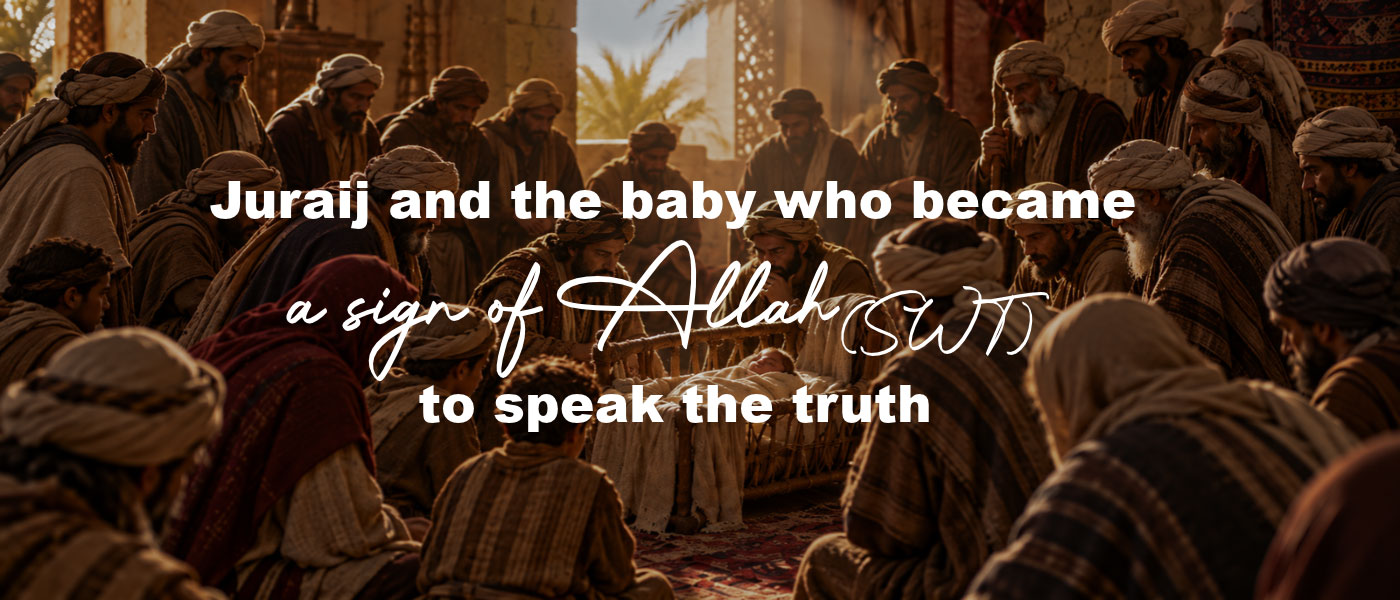
There are moments in the sacred history of Islam when Allah (SWT) causes the ordinary laws of human nature to give way to a sign that is so extraordinary and unexplainable, it leaves the human mind perplexed, and the crowd left without an argument to challenge the existence and glory of Allah (SWT). Imagine this scene—a child who has not yet learned the names of things speaks with the clarity and proficiency of an adult. A reputation that appears to have been destroyed beyond repair is restored by a few words from the lips of an infant. A man who has withdrawn from society in pursuit of worship suddenly finds himself dragged into the center of a public scandal. Within the space of a single ordeal, devotion, parental rights, temptation, accusation, anger, innocence, and divine vindication converge upon one remarkable figure who is a worshiper from the Bani Israel named Juraij.
The concept of an infant speaking from the cradle already exists as a majestic story found within The Quran. When Lady Maryam bint Imran (as) returned to her people carrying the infant Prophet ‘Isa ibn Maryam (as), she was confronted with an accusation so grave and intense that ordinary explanation could scarcely have rescued her reputation. However, holding great composure and patience, instead of giving an answer to her accusers, she pointed towards her newborn. The people looked in astonishment. Allah (SWT) says in The Quran that the people said, “‘How can we talk to someone who is an infant in the cradle?’” With the miracle blessed to him by Allah (SWT), Prophet ‘Isa ibn Maryam (as) then said, “‘I am truly a servant of Allah. He has destined me to be given the Scripture and to be a prophet.’” (The Clear Quran®, 19:29-30)
In that moment, the concept of an infant speaking from the cradle became a means by which Allah (SWT) manifested truth when appearances seemed overwhelmingly to favor falsehood. Keeping this background from The Quran in mind, the Messenger of Allah (SAW) now related another extraordinary account involving a baby before the normal age of speech. The story is transmitted from Abu Hurayrah (ra) in the rigorously authenticated collections of Sahih Bukhari and Sahih Muslim, placing it amongst the most securely established narratives attributed to the Prophet (SAW). Yet the hadith is memorable not merely because it contains a miracle. Its deeper power lies in the human drama surrounding that miracle because, before the infant speaks, the listener is made to witness how quickly piety can be misunderstood, how violently a reputation can collapse, and how powerless even a devoted worshipper may become when society believes as an accusation against him.
Juraij was not introduced by the Prophet (SAW) as a king, warrior, statesman, or celebrated scholar. He was a devoted worshipper, a man known for his religious dedication, who had constructed for himself a place of worship and devoted himself to acts of devotion. Nevertheless, seclusion did not place him beyond trial. Indeed, the very reputation he had acquired for worship would become part of the setting for one of the severest ordeals imaginable. Before his name would be cleared, his worship would be interrupted, his character would be attacked, his sanctuary would be destroyed, and he would be confronted with an accusation capable of transforming admiration into contempt almost instantly. The hadith therefore begins with something far more subtle than the miracle for which it is usually remembered. It begins with a conflict between two claims upon the conscience: devotion to Allah (SWT) and the right of a mother over her son. Juraij was praying when his mother called him. He found himself inwardly asking whether he should continue his prayer or answer her call. The moment appears small when compared with everything that follows, but the Prophet (SAW) did not include it without significance. From that seemingly private decision would emerge a chain of events that carried Juraij from the solitude of his prayer chamber into humiliation before his people.
What followed was calculated to strike precisely where Juraij’s public identity seemed strongest. A woman of striking beauty, whose advances he refused, became connected to a scheme by which his chastity and religious reputation would be brought into question. Eventually, a newborn child was presented as the supposed evidence of his guilt. To the people around him, the matter seemed settled. They possessed an accusation, a mother, and a baby. What more could they require? The structures men build around themselves can be demolished, and the reputation they spend years cultivating can be shattered within an afternoon. Juraij would discover both realities. Yet the people knew only what their eyes could see, while Allah (SWT) knew what had actually occurred.
At the center of this hadith lies one of the most haunting lessons found throughout The Quran: appearances can become so persuasive that falsehood seems indisputable, while the truth appears to have no witness left to defend it. Allah (SWT), however, is not dependent upon the witnesses like human beings are. When He (SWT) wills to vindicate His servant, He (SWT) may bring testimony from a place no court would think to summon and no accuser could reasonably anticipate. In the story of Juraij, when grown men had already reached their conclusions and a helpless infant appeared to confirm the scandal merely by existing, Allah (SWT) caused that very infant to become the means through which the deception was exposed. The story of Juraij and the baby who spoke from the cradle is therefore not simply an account of a miracle from an earlier nation. It is a profound Prophetic lesson about worship and wisdom, the immense station of parents, the danger of public accusation, the fragility of reputation, the consequences of supplication, the trial of sexual temptation, and the manner in which Allah (SWT) can reveal innocence after every visible circumstance seems to point toward guilt.
What does the hadith say about what happened?
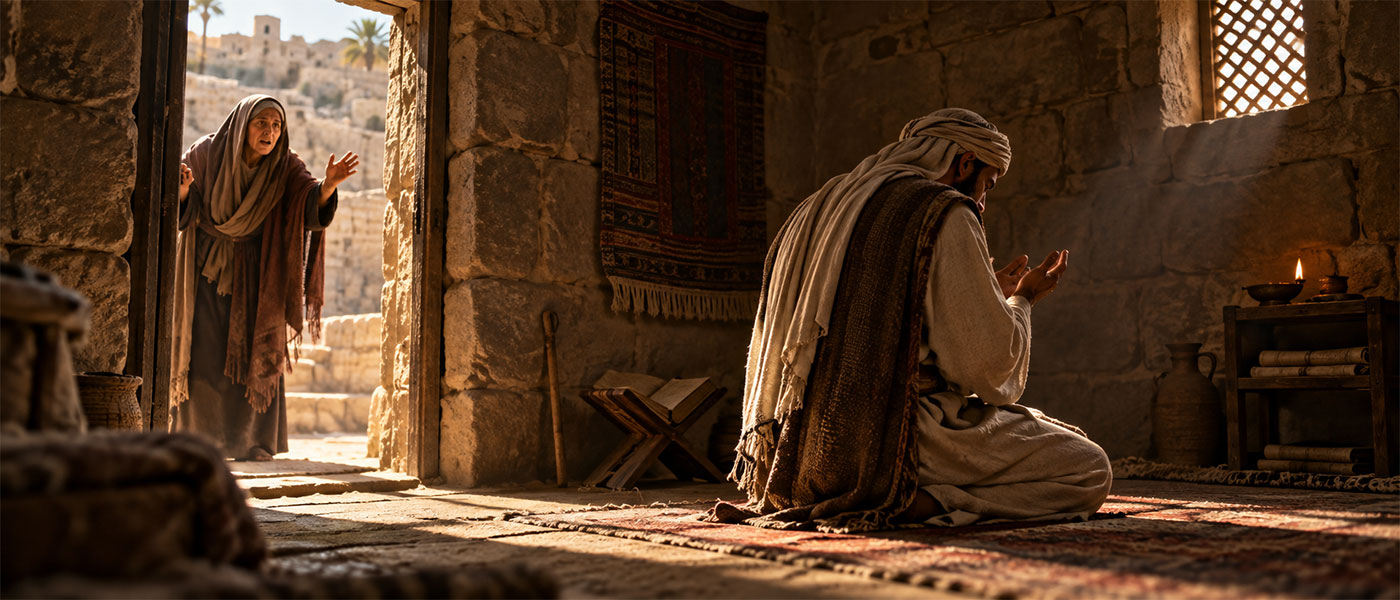
Juraij was a devoted worshipper from the Children of Israel who had built for himself a place of worship and spent much of his time in prayer. One day, while he was praying, his mother came and called out to him, “Juraij!” He heard her, but he was already in prayer. Unsure whether to answer her or continue, he said to himself, “My Lord, my mother, or my prayer?” He chose to remain in prayer, and his mother left. The next day, she came again while he was praying and called for him. Once more, Juraij chose to continue his prayer rather than answer her. She returned a third time and called him again, but he still did not respond. Hurt and angered by this, she made a supplication against him, “O Allah! Do not let him die until he has seen the face of prostitutes.” Some time later, the people began speaking about Juraij and praising his devotion. A woman who was known for her beauty heard them talking about him and said that, if they wished, she would try to tempt him. She went to Juraij and attempted to seduce him, but he refused to pay attention to her.
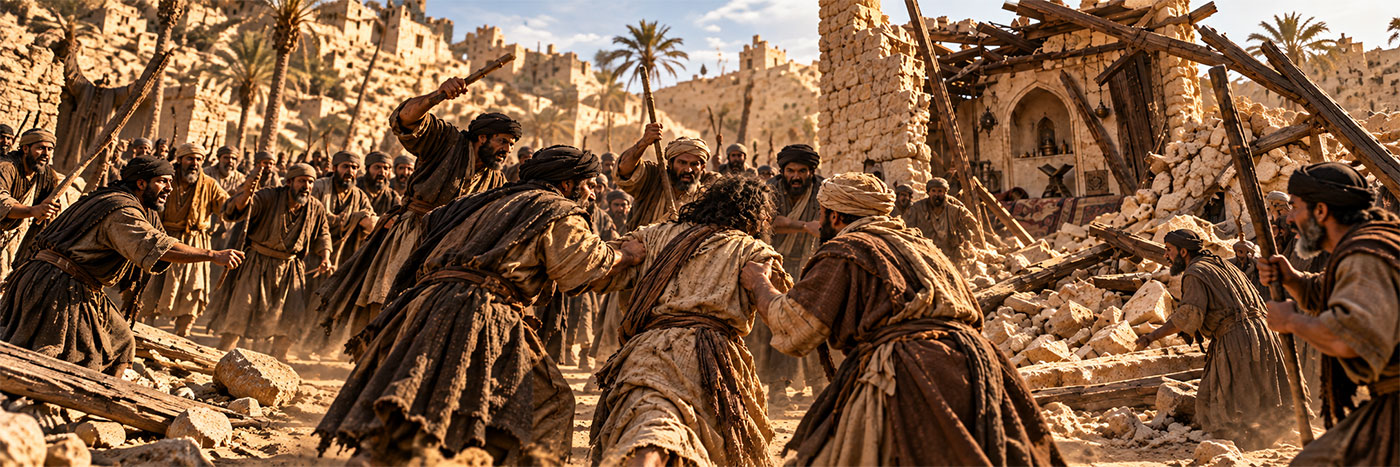
After failing with Juraij, she went to a shepherd who used to stay near his place of worship and had relations with him. She became pregnant, and when she gave birth, she claimed that the child was Juraij’s. When the people heard of this, they were furious. They went to Juraij, dragged him down from his place of worship, demolished it, and began striking him. Juraij asked, “What is the matter with you?” They told him, “You committed adultery with this woman, and she has given birth to your child.” Juraij asked, “Where is the child?” They brought the infant to him. Juraij asked them to leave him for a moment so that he could pray. After finishing his prayer, he went to the child, touched him on the stomach and said, “O child, who is your father?” The infant spoke and said, “So-and-so, the shepherd.”
The people immediately realized that Juraij had been telling the truth. They turned to him, kissing him and seeking his forgiveness. They even offered to rebuild his place of worship out of gold. Juraij refused and told them, “No. Rebuild it from clay as it was before.” And they did.
The rights of parents, and the responsibility of parents—do not confuse the two
One of the clearest lessons in the story of Juraij is the seriousness of a parent’s right. Juraij was not wasting his time when his mother called him, he was simply praying. Yet his devotion did not remove the obligation to consider his mother’s claim upon him. The Quran repeatedly places kindness to parents immediately after the worship of Allah (SWT), “For your Lord has decreed that you worship none but Him. And honour your parents. If one or both of them reach old age in your care, never say to them even ugh, nor yell at them. Rather, address them respectfully.” (The Clear Quran®, 17:23)
A person can therefore be deeply committed to acts of worship and still fall short if that worship causes him to neglect duties that Allah (SWT) Himself has emphasized. At the same time, the hadith contains an equally important warning for parents. When Juraij repeatedly failed to answer his mother, she became angry and supplicated, “O Allah, do not let him die until he has looked upon the faces of prostitutes.” Her words were not insignificant. The trial that later befell Juraij bore an unmistakable connection to that supplication. For that reason, parents should be extremely careful about what they say in moments of anger. A mother or father may speak out of frustration and say, “May Allah punish you,” “May you be ruined/never succeed,” or make some other harmful dua against a child without seriously considering what those words mean. The Prophet (SAW) has explicitly warned against this.
Jabir ibn’Abdillah (ra) reported that the Messenger of Allah (SAW) said, “Do not supplicate against yourselves, do not supplicate against your children, and do not supplicate against your wealth, lest you coincide with a time in which Allah is asked for something and He answers you.” (Sahih Muslim)
The tongue of an angry parent should be extremely careful about what they say in moments of anger. Parents possess an honored position in Islam, and their supplication carries weight, but that honor should make them more careful, not less careful, with the words they direct toward their children. Anger passes, but the consequences of a supplication may not. Juraij’s story therefore places responsibility on both sides. Children must not treat the calls, needs, or feelings of their parents casually, especially when what occupies them is only a voluntary act. Parents, however, must also restrain themselves when hurt or angry and avoid turning a passing moment of frustration into a supplication for harm.
A parent who is displeased with a child should ask Allah (SWT) to guide him, correct him, soften his heart, and make him better. That is far more fitting and in line with the Sunnah of the Prophet (SAW) than asking Allah (SWT) to afflict the very person whose well-being they ordinarily pray for.
Allah (SWT) does not cast His judgment onto His servants until their final moments. So, why are you so quick to judge others?
Another lesson in the story of Juraij is how dangerous it is to treat an accusation as though it were already proven. The woman claimed that Juraij had fathered her child, and the people reacted immediately. They went to his place of worship, tore it down, dragged him out, and struck him. By the time Juraij was able to ask what he was being accused of, they had already judged him guilty. The accusation seemed believable. There was a woman, there was a child, and there was a direct claim. Yet none of that made the claim true. This is one of the reasons why Islam places such a high value on protecting people’s honor and establishing facts before passing judgment.
Allah (SWT) says in The Quran, “O believers, if an evildoer brings you any news, verify it so you do not harm people unknowingly, becoming regretful for what you have done.” (The Clear Quran®, 49:6) This warning is against acting upon believing false information that harms someone before the truth has been established.
The Quran is even more severe when it comes to accusations of sexual immorality. Allah (SWT) says, “Those who accuse chaste women of adultery and fail to produce four witnesses, give them eighty lashes each. And do not ever accept any testimony from them—for they are indeed the rebellious—,” (The Clear Quran®, 49:6)
Such an accusation is not treated as ordinary gossip because the damage it causes is not ordinary either. A person’s authority, family, relationships, livelihood, and standing in the community can all be affected by a claim that may later prove to be false. Juraij’s story shows how quickly public opinion can turn. The same man whose worship had once been admired was suddenly treated as though his entire religious life had been a deception. The people did not wait for evidence. They did not investigate. They did not ask whether the woman’s claim could be false. They saw what appeared to be a scandal and responded to the appearance of guilt rather than the reality of the matter. That mistake is not confined to ancient times. An accusation can still travel much faster than a correction. A screenshot, a clipped video, a message taken out of context, or a single person’s claim can be enough for others to form conclusions before hearing both sides. Even if the truth eventually emerges, the damage may already have been done.
The hadith teaches us to resist that impulse. Not every claim deserves immediate belief, and not every appearance tells the whole story. When another person’s honor is at stake, caution is not indifference. It is part of justice. Juraij was innocent before the child spoke, but the people only treated him as innocent after they were forced to see the truth. The better path would have been to withhold judgment until the truth had been established in the first place.
The truth cannot remain hidden forever
Juraij had no obvious way to prove his innocence. The people had already believed the accusation against him, yet Allah (SWT) brought the truth to light through the most unexpected witness, and that was the infant itself. This is a pattern we elsewhere in The Quran and Sunnah:
- Prophet Yusuf (as): His innocence was defended by the fact that his shirt was torn from behind, showing that he had been fleeing from the wife of al-’Aziz rather than pursuing her. (The Clear Quran®, 12:26-28)
- Lady Maryam bint Imran (as): When her people accuse her, Allah (SWT) causes the infant Prophet Isa ibn Maryam (as) to speak from the cradle and defend her honor. (The Clear Quran®, 19:29-30)
- The murdered man among the Bani Israel: Allah (SWT) brought the victim back to life so that the truth behind his murder could be exposed. (The Clear Quran®, 2:72-73)
- Lady Ayesha bint Abu Bakr (ra): When she was falsely accused in the Incident of the Slander, Allah (SWT) revealed verses of The Quran declaring her innocence. (The Clear Quran®, 24:11-20)
Juraij’s story belongs to this same pattern. People may misunderstand, accuse, and judge, but Allah (SWT) knows the reality of every matter, and can bring the truth to light in ways no one expects.
Dua
O Allah! Protect us from false accusations, hasty judgments, and the harm of people’s assumptions. If we are ever misunderstood or wronged, bring the truth to light in the way You know is best.
O Allah! Give us patience when we cannot defend ourselves, keep our hearts firm upon what is right, and never allow the judgment of people to matter more to us than what You know to be true.
Ameen, ya Rabb!