Ya’juj and Ma’juj—the nations no army will be able to defeat
October 22, 2026

Throughout human history, entire civilizations have risen to power, conquered vast territories, and brought destruction to the lands they invaded. Yet The Quran warns of two nations whose emergence will unleash a catastrophe unlike anything humanity has ever witnessed. Their numbers will be overwhelming, their destruction will spread across the earth, and their arrival will occur at a time when the world is already witnessing extraordinary signs of the approaching Day of Judgment. They are Ya’juj and Ma’juj, also known as Gog and Magog, two nations whose existence is confirmed by divine revelation but whose whereabouts remain unknown. What makes their story particularly terrifying is not simply the destruction they will cause, but the fact that their eventual release is a promise from Allah (SWT), and when that appointed moment arrives, no human power will be capable of stopping them.
The Quran tells us that a powerful ruler named Dhul-Qarnayn constructed an extraordinary barrier to prevent them from spreading corruption across the land. Yet that protection was never intended to last forever. Allah (SWT) has already decreed a time when the barrier will no longer restrain them, allowing them to emerge in overwhelming numbers. Their release will bring a period of devastation so severe that, according to an authentic narration in Sahih Muslim, even Prophet Isa (as) and his followers will seek refuge rather than confront them.
Allah (SWT) says in Surah Al-Anbiya, “[…] until after Gog and Magog have broken loose ˹from the barrier˺, swarming down from every hill […].” (The Clear Quran®, 21:96)
But who exactly are Ya’juj and Ma’juj? What caused Dhul-Qarnayn to imprison them behind such an extraordinary structure? Where is this barrier, and what do authentic Islamic sources actually reveal about the events that will follow its destruction? To understand one of the most extraordinary signs of the approaching Day of Judgement, we must begin with the account Allah (SWT) has preserved in The Quran, separating what revelation establishes from the many theories that have emerged over time.
So, who exactly are Ya’juj and Ma’juj?
One of the most common misconceptions about Ya’juj and Ma’juj is that they are supernatural creatures, monsters, or beings entirely different from mankind. However, Islamic teachings identify them as human beings descended from Prophet Adam (as). They are traditionally understood by Muslim scholars to belong to the descendants of Prophet Nuh (as), through his son Yafith, although The Quran does not explicitly establish this particular lineage. Despite the frightening descriptions associated with them, they are not jinn, demons, or another species. They belong to humanity, a distinction that makes their account particularly unsettling because it demonstrates the extent of corruption and wrongdoing that human beings themselves are capable of committing. One of the most remarkable details about Ya’juj and Ma’juj concerns their extraordinary population.
In a narration recorded in Sahih Bukhari, Prophet Muhammad (SAW) described a conversation that will take place between Allah (SWT) and Prophet Adam (as) on the Day of Resurrection. Allah (SWT) will command Prophet Adam (as) to bring forth those destined for the Fire, saying “Out of every thousand, take out 999.” The companions were alarmed by this. The Prophet (SAW) clarified, “From Gog and Magog (Ya’juj and Ma’juj) there will be 999, and from you one.” He (SAW) then gave glad tidings that his Ummah would make up a significant portion of the people of Paradise. This narration, though not establishing a total number, is commonly understood as an indication of the immense population of Ya’juj and Ma’juj.
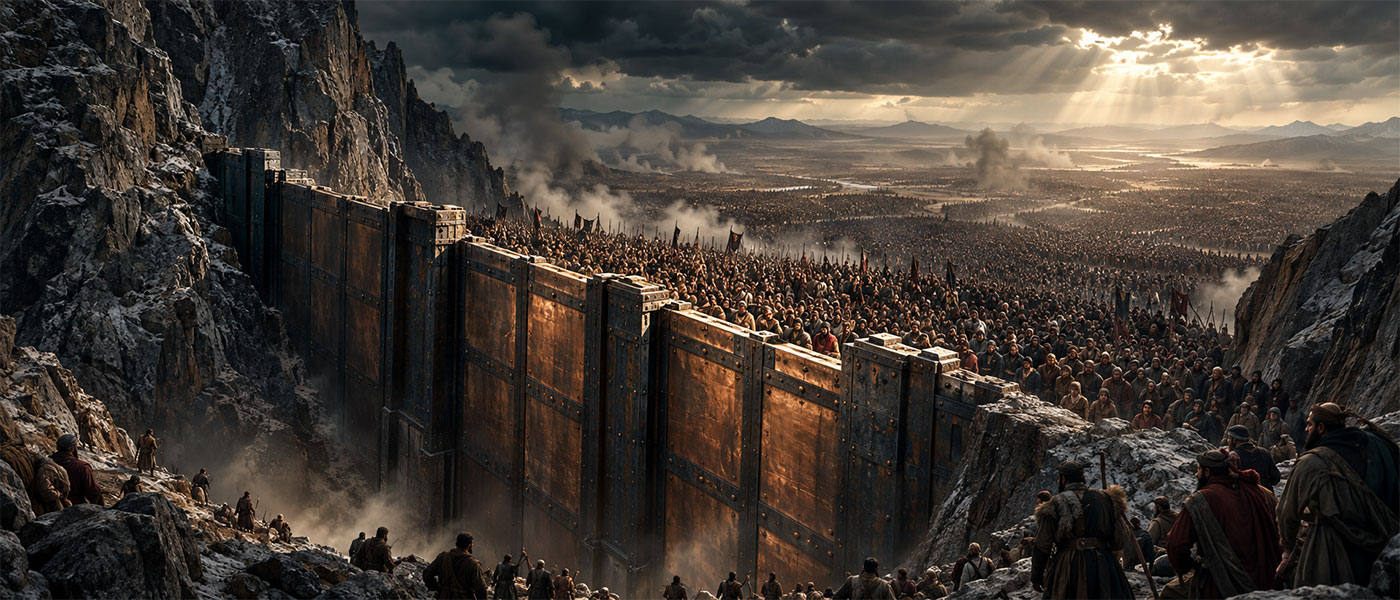
Their physical appearance has also generated considerable discussion throughout Islamic history. Various accounts have described them as unusually short, possessing distinctive facial features, or having extraordinary physical characteristics. However, many of these descriptions come from reports whose authenticity is disputed or insufficiently established. The Quran does not provide a detailed description of their bodies, clothing, language, or physical features. Consequently, popular illustrations portraying them as monstrous or deformed beings should not be mistaken for descriptions established by authentic revelation. Their precise ethnic origins and geographical identity also remain uncertain, despite numerous historical attempts to associate them with particular peoples or civilizations.
What The Quran does establish, however, is that their conduct had already earned them a reputation for corruption long before the events of the Last Hour. In Surah Al-Kahf, a community encountered by Dhul-Qarnayn complained, “‘O Ⱬul-Qarnain! Surely Gog and Magog are spreading corruption throughout the land. Should we pay you tribute, provided that you build a wall between us and them?’” (The Clear Quran®, 18:94) The Arabic word mufsidun, used in this verse, refers to those who spread corruption, disorder or wrongdoing. Although The Quran does not specify every offense committed by these nations, the community’s plea reveals that their actions had become a serious threat to its security and well-being. The people were not merely describing an unfamiliar neighboring population, they were appealing for protection from a danger they believed they could no longer manage themselves. Their desperate request would lead to one of the most extraordinary construction projects described in The Quran.
Dhul-Qarnayn and the construction of the barrier
The story of Dhul-Qarnayn is preserved in Surah Al-Kahf where Allah (SWT) describes a ruler who had been granted considerable authority, resources, and the means to travel across distant lands. Rather than using his position solely to accumulate wealth or expand his influence, Dhul-Qarnayn demonstrated a commitment to justice and the protection of vulnerable communities. During one of his journeys, he traveled until he reached a region situated between two mountains, where he encountered a people who could barely understand his speech. Their geographical isolation and difficulty communicating with outsiders made the encounter particularly significant, as the solution to their predicament would require far more than military strength. The inhabitants offered Dhul-Qarnayn payment in exchange for constructing a protective barrier. However, he declined their financial contribution, explaining that the authority and resources Allah (SWT) had already granted him were better than anything they could offer. Instead, he requested their physical assistance, demonstrating that the community itself would participate in establishing its own protection.
Allah (SWT) records his response: “‘What my Lord has provided for me is far better. But assist me with resources, and I will build a barrier between you and them.’” (The Clear Quran®, 18:95) The construction described in the following verses is remarkably detailed. Dhul-Qarnayn instructed the people to bring large pieces of iron, which were arranged until the space between the two mountains had been filled. He then ordered the workers to blow air into the structure until the iron became intensely hot. Once it had been heated, he called for molten copper to be poured over it. The resulting structure was so formidable that those on the other side could neither climb over it nor penetrate it by digging through.
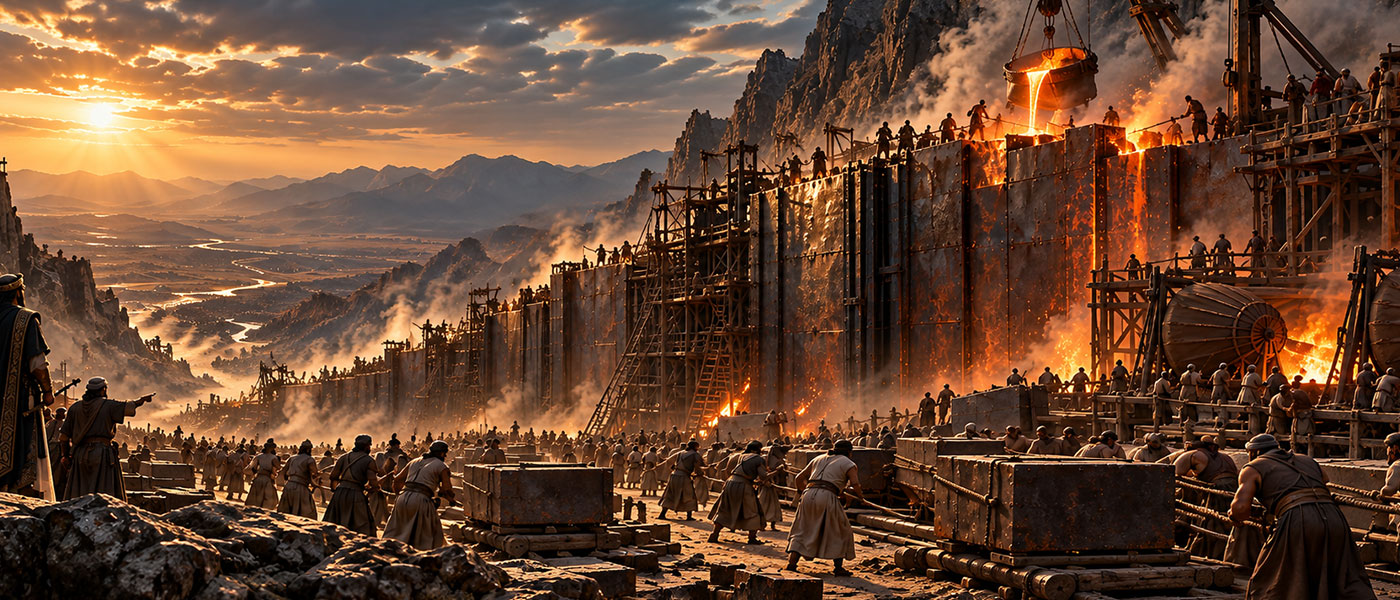
The Quran states, “And so the enemies could neither scale nor tunnel through it.” (The Clear Quran®, 18:97) The account is especially interesting because it describes the use of iron, intense heat, and molten metal in the construction of a fortified structure. Although these details have encouraged numerous historical and geographical investigations, The Quran does not provide measurements, precise engineering specifications, or a location that would allow the barrier to be identified with certainty. Its construction illustrates how Dhul-Qarnayn used the knowledge and capabilities available to him to accomplish something the inhabitants had been unable to achieve on their own. Yet Dhul-Qarnayn did not regard this extraordinary accomplishment as proof of his personal greatness. Upon completing the barrier, he attributed its success entirely to the mercy of Allah (SWT). He also acknowledged that the structure’s strength would not make it permanent.
Recorded in Surah Al-Kahf, he declared, “‘This is a mercy from my Lord. But when the promise of my Lord comes to pass, He will level it to the ground. And my Lord’s promise is ever true.’” (The Clear Quran®, 18:98) This final declaration establishes an important distinction between the impressive achievements of human beings and the absolute authority of their Creator. Dhul-Qarnayn had succeeded in constructing a barrier that could withstand the efforts of those who it was intended to restrain, but he understood that its continued existence depended entirely upon Allah’s (SWT) will. Even the strongest structures, regardless of their materials or engineering, remain subject to the decree of the One who created them.
Dhul-Qarnayn and the construction of the barrier
For centuries, Muslim historians, geographers, and scholars have attempted to identify the location of the barrier constructed by Dhul-Qarnayn. The mystery has attracted considerable attention because The Quran describes a physical structure built in a mountainous region, yet provides no geographical coordinates, recognizable place names, or definitive indication of which part of the world it occupies. This absence of geographical detail has encouraged numerous theories, with researchers examining ancient fortifications, mountain passes, and historical accounts in an effort to connect them to The Quranic narrative. However, despite these investigations, no proposed location has been conclusively established as the barrier of Ya’juj and Ma’juj. One of the most frequently discussed possibilities is the Caucasus region, which stretches between the Black Sea and the Caspian Sea. This mountainous area contains several historically important passages, including the Darial Gorge and the fortified city of Derbent in present-day Russia. Both locations have appeared in discussions concerning Dhul-Qarnayn because they occupy strategically important routes through mountainous terrain.
Derbent, in particular, is known for its ancient defensive walls, which were developed extensively under the Sasanian Empire to control movement along the western coast of the Caspian Sea. Although these structures demonstrate how ancient civilizations used natural geography to establish formidable defense, there is no reliable evidence confirming that either location contains the barrier described in Surah Al-Kahf. Another popular theory connects the barrier to the Great Wall of China. Its enormous length, historical significance, and original defensive purpose have encouraged some to associate it with the account of Ya’juj and Ma’juj. However, this identification presents substantial difficulties. The Great Wall consists largely of structures constructed and rebuilt across different Chinese dynasties using materials such as stone, brick, and compacted earth. Its known construction history does not correspond to the specific account preserved in The Quran. Furthermore, the Great Wall’s location and history are extensively documented, whereas the identity and location of Dhul-Qarnayn’s barrier remain uncertain. Similarities in defensive purpose alone are insufficient to establish that two structures are the same.
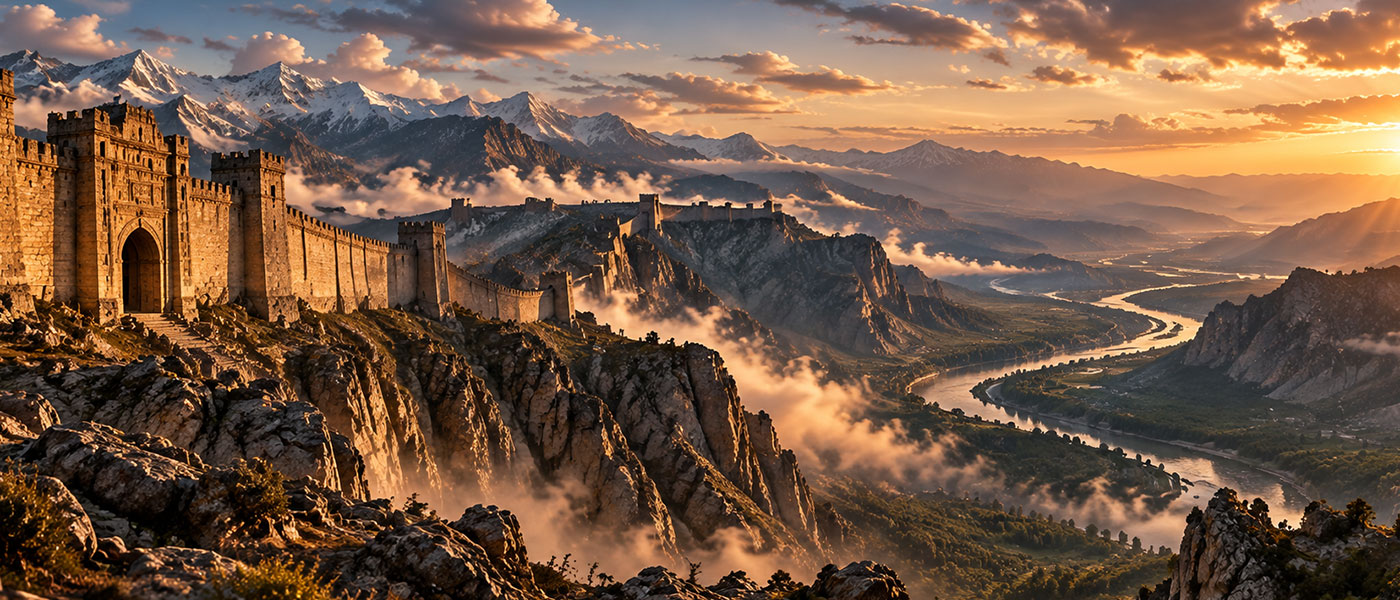
The uncertainty surrounding the barrier has also raised questions in the modern world. With satellites, advanced mapping technologies, and increasingly detailed geographical surveys, some people wonder how such a remarkable structure could remain unidentified. Various explanations have been proposed, including the possibility that its location has been misunderstood, that its original surroundings have changed over time, or that it cannot be identified using currently available evidence. Nevertheless, these remain possibilities rather than established Islamic teachings. Neither The Quran nor an authentic hadith provides a detailed explanation of how the barrier relates to modern geographical knowledge, and it would be misleading to present any speculative explanation as a confirmed fact.
Ultimately, the geographical mystery surrounding Dhul-Qarnayn’s barrier demonstrates the importance of distinguishing between what Islamic scripture reveals and what human beings attempt to reconstruct through historical investigation. The Quran establishes the construction of the barrier and the circumstances surrounding it, but does not identify a location that can be verified with certainty today. While studying ancient civilizations and geographical landmarks may provide useful historical context, no archaeological discovery or modern theory should be treated as definitive without sufficient evidence. The historical details concerning Derbent’s fortifications are documented by UNESCO, while The Quranic description of the barrier appears in The Quran.
The final emergence of Ya’juj and Maj’uj, and their destruction
Long before the events of the Last Hour unfold, Prophet Muhammad (SAW) delivered a warning that revealed something extraordinary about the barrier of Ya’juj and Ma’juj. According to a narration from Lady Zaynab bint Jahsh (ra), recorded in Sahih Bukhari, the Prophet (SAW) once entered her presence, visibly frightened and announced that a small opening had already been made in the barrier. He (SAW) demonstrated the approximate size by forming a circle with his thumb and index finger. Alarmed by his warning, Lady Zaynab bint Jahsh (ra) asked whether destruction could reach a community even while righteous people lived among them. The Prophet (SAW) answered, “Yes, when evil becomes widespread.” His response established a serious warning about the consequences of widespread corruption, demonstrating that the presence of righteous individuals does not necessarily protect an entire society from worldly calamities. However, the narration does not establish when the final release will occur or how much the opening has changed since that time.
The most detailed account of their eventual emergence appears in Sahih Muslim, within a lengthy narration describing the events surrounding the return of Prophet Isa (as) and the defeat of the Dajjal. After Prophet Isa (as) kills the Dajjal, Allah (SWT) informs him, “I have brought forth servants of Mine against whom none will be able to fight.” Prophet Isa (as) will then be commanded to take the believers to Mount Tur, where they will seek refuge. Meanwhile, Ya’juj and Ma’juj will advance across the land, consuming its resources as they travel. The Prophet (SAW) described how the first groups among them will pass by the lake of Tiberias and drink its water. By the time the last groups arrive, the lake will have been so depleted that they will remark that water once existed there. This extraordinary detail illustrates the scale of their advance and the devastating consequences their movement will have on the surrounding environment.
As the crisis intensifies, Prophet Isa (as) and the believers will remain confined to Mount Tur, unable to safely descend. Their circumstances will become so constrained that the head of an ox will be worth more than one hundred dinars. Another narration in Sahih Muslim describes the arrogance of Ya’juj and Ma’juj as they reach a mountain near Bayt al-Maqdis. Believing they have overcome the inhabitants of the earth, they will attempt to direct their aggression toward the heavens by shooting arrows upward, The arrows will return stained with blood, a detail reported in the hadith without an explanation of its precise mechanism. Their conduct will demonstrate an extraordinary degree of arrogance, as they behave as though their destructive power has made them invincible. Despite the apparent hopelessness of the situation, their destruction will not come through warfare or the efforts of an opposing army. Prophet Isa (as) and his companions will turn to Allah (SWT) in supplication, seeking deliverance from the calamity surrounding them. Allah (SWT) will then send a particular affliction upon Ya’juj and Ma’juj, described in Sahih Muslim as creatures that attack their necks. By the following morning, they all will have perished. The suddenness of their deaths is particularly striking because the very nation that appeared impossible to defeat will be eliminated through a means entirely beyond their ability to resist. Their strength, numbers, and previous victories will offer them no protection against the decree of Allah (SWT).
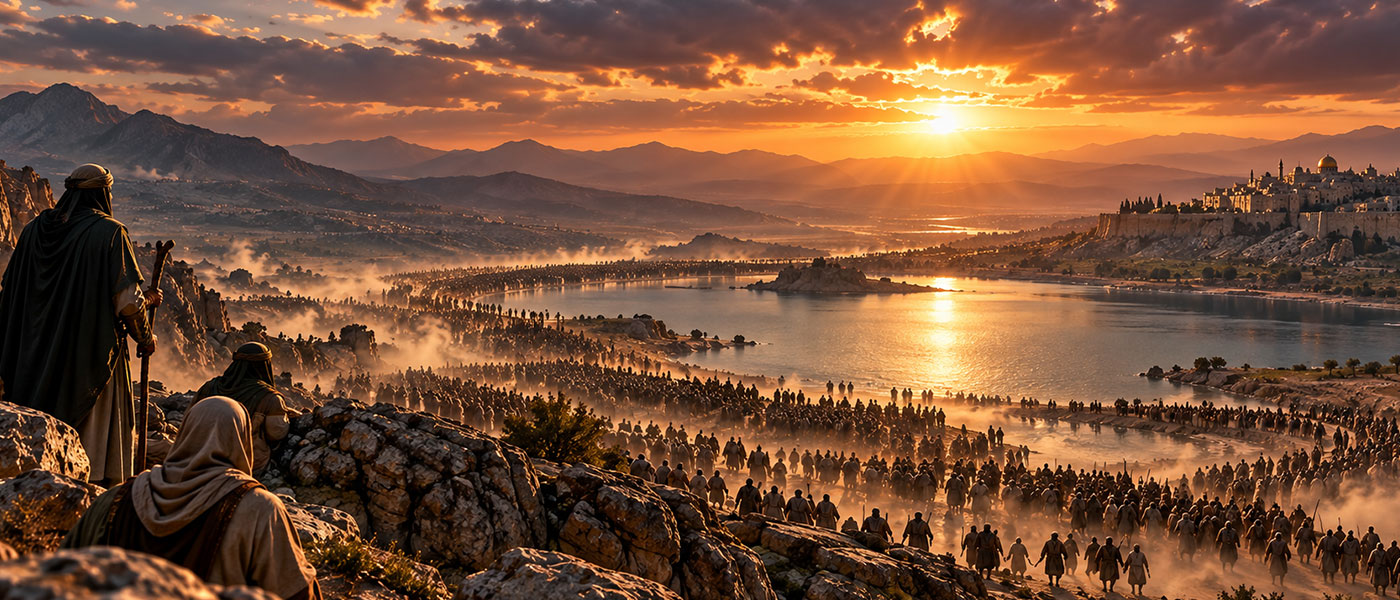
However, their deaths will not immediately bring an end to the suffering. When Prophet Isa (as) and his followers descend from Mount Tur, they will discover that the land has been overwhelmed by the remains of Ya’juj and Ma’juj. Their bodies will produce such an unbearable stench that the believers will once again seek Allah’s (SWT) assistance. In response, Allah (SWT) will send enormous birds, described as having necks resembling those of Bactrian camels, to carry away their remains. A cleaning rainfall will follow, washing the earth until it becomes extraordinarily clean. The narration then describes a remarkable restoration of agricultural abundance, with the land producing enormous fruits and livestock yielding exceptional quantities of milk. After a period characterized by deprivation and destruction, the earth will once again provide abundantly for its inhabitants.
The account of Ya’juj and Ma’juj ultimately demonstrates that even the most overwhelming worldly power remains insignificant before the authority of Allah (SWT). Their destruction will arrive not through superior weapons, greater armies, or human ingenuity, but through divine intervention following the sincere supplication of the believers. The narration also makes clear that their defeat will not itself mark the immediate arrival of the Day of Judgment. Other events will follow, including the passing of the remaining believers before the Hour comes upon those who remain. Their story, therefore, leaves humanity with an important reminder that no matter how powerful an individual, community, or civilization becomes, its existence remains entirely dependent upon the will of Allah (SWT).
Dua
O Allah! Protect us and our families from the trials and tribulations of the Last Hour, both those that are apparent and those that remain hidden. Strengthen our faith when fear and hardship surround us, and grant us the patience, wisdom, and unwavering trust in You that You bestow upon Your righteous servants.
O Allah! Just as You will deliver Prophet Isa (as) and the believers from the devastation of Ya’juj and Ma’juj, grant us Your protection from every trial that threatens our faith. Keep our hearts firm upon Your guidance, allow us to remain among those who seek refuge in You, and grant us a good ending upon iman.
Ameen, ya Rabb!