Lady Fatima bint Muhammad (RA):The Radiant Archetype of Pietyand Devotion
Have you ever known someone who lived their life unseen – hidden behind a veil of modesty and humility – yet is revered by billions across centuries and continents? In the tapestry of Islamic history, among the figures who command profound reverence is Lady Fatima bint Muhammad (RA), known by her honorific al-Zahra, “the Radiant”. As the daughter of the Prophet Muhammad (SAW) and his first and beloved wife Lady Khadija bint Khuwaylid (RA), Lady Fatima bint Muhammad (RA) was born into the noblest lineage and occupies a remarkable position in Islamic history. Her life, though brief, is a profound testament to devotion, resilience, and moral clarity, making her a timeless exemplar of faith and fortitude. Early Life Lady Fatima bint Muhammad (RA) entered a world forged by revelation and resistance. She was raised under the guidance of both a pioneering mother and the greatest of all creation (SAW), experiencing trials that would leave an indelible mark on her spirit. Her childhood was not one of indulgence – it was shaped by sacrifice and service. Indeed, Lady Fatima (RA) grew up during the early years of Islam when the Quraysh were growing hostile, and her father was already bearing the weight of divine revelation. As a child, Lady Fatima bint Muhammad (RA) witnessed her father being humiliated by Quraysh leaders who placed camel entrails on his back during prayer. She rushed to remove the filth and comfort him. This act of courage and compassion earned her the title Umm Abiha (Mother of Her Father) – a reflection of her nurturing presence and emotional closeness to the Prophet (SAW). Spiritual Eminence: Sayyidat Nisa al-Jannah And, while she was known by many esteemed names in terms of this world, her spiritual stature, too, was made clear when the Prophet (SAW) declared: ❝Fatima is the leader of the women of Paradise.❞ This statement sufficiently encapsulates her elevated status in the afterlife and her role as a moral beacon for generations of believers – and is the reason she is known as Sayyidat Nisa al-Jannah. A Life of Service and Dhikr Having grown up in a household of divine love and prophetic manners, Lady Fatima bint Muhammad (RA) remained ever-humble, never allowing others to be in service of her but always being in service of others. Her hands had become rough from grinding grain, her clothes were patched with her own sewed stitches, and she would often fall asleep hungry after willingly giving away the bread that she would make. Between having a servant to help with the chores and dhikr to ease the burden of household work, she chose the latter and the Prophet (SAW) gifted to her what we now know as Tasbeeh-e-Fatima: the dhikr of SubhanAllah, Alhamdulillah, and Allahu Akbar, a tradition that many Muslims continue to this day after praying their salah. The Prophet’s (SAW) Unique Love for His Daughter The Prophet (SAW) loved Lady Fatima (RA) in a way that was beautiful and pure. He (SAW) once said, ❝Fatima is a part of me. Whoever pleases her, pleases me. Whoever angers her, angers me.❞ This love was not just an ordinary sentiment, SubhanAllah, this was a divine connection. In fact, Lady Ayesha bint Abu Bakr (RA) is quoted to have said, “I did not see anyone who more resembled the Messenger of Allah, may Allah bless him and grant him peace, in words or speech and manner of sitting than Fatima. When she came to him, he stood up for her, made her welcome, kissed her forehead, and had her sit in his place. When the Prophet (SAW) came to her, she stood up for him, took his hand, made him welcome, kissed him, and made him sit in her place. She came to him during his final illness and he greeted her and kissed her.” (Al-Adab Al-Mufrad) Marriage, Children, and Moral Legacy She married Ali ibn Abi Talib (RA), the cousin of the Prophet (SAW) and one of the first to believe in Islam. The couple had four children: Hassan (RA), Hussain (RA), Lady Zainab (RA), and Lady Umm Kulthum (RA) and they instilled in them the values of justice, compassion, and steadfastness – qualities that would define their lives and inspire countless others. Lady Fatima bint Muhammad’s (RA) role as a mother to Hassan (RA) and Hussain (RA) further amplified her legacy, as both sons would later become pivotal figures in the moral and spiritual trajectory of Islam. Lady Fatima bint Muhammad’s (RA) marriage to Ali ibn Abi Talib (RA) is often described as a union of virtue and divine wisdom. Despite their modest means, the couple’s home was a sanctuary of faith, humility, and service. Their lifestyle – marked by simplicity and sacrifice – embodied the Islamic ideal of asceticism and dedication. The Whisper That Made Her Cry and Smile One of the most tender and emotionally resonant moments in the life of Lady Fatima bint Muhammad (RA) occurred during the final illness of her father, the Prophet Muhammad (SAW). This moment is preserved in the authentic collections of hadith and offers a glimpse into the profound love and spiritual intimacy between father and daughter. According to a narration by Lady Ayesha bint Abu Bakr (RA), “The Prophet (SAW) said, “Welcome, O my daughter!” Then he (SAW) made her sit on his right or on his left side, and then he (SAW) told her a secret and she started weeping. I asked her, “Why are you weeping?” He (SAW) again told her a secret and she started laughing. I said, “I never saw happiness so near to sadness as I saw today.” I asked her what the Prophet (SAW) had told her. She said, “I would never disclose the secret of Allah’s Messenger (SAW).” When the Prophet (SAW) died, I asked her about it. She replied. “The Prophet (SAW) said: ‘Every year, Jibraeel used to revise the Quran with me only once, but, this year, he has done so twice. I think this portends my death, and you will be the first of my family to follow
5 times The Quran literally understood what you’re going through
You’re lying in bed at 2 a.m., doomscrolling through your phone, your thumb swiping through videos, images, and feeds on every social media platform that you have. You switch between Instagram, TikTok, Facebook, you’ve checked every message twice, and when you finally lock your phone and put it next to you on the bed with your eyes trained up to the ceiling, something doesn’t feel right. You feel empty. That emptiness is causing your heart to feel restless. It could be the guilt from missing out on your prayers because you’ve been attached to your phone, or maybe you’ve been slipping into things you once promised yourself you wouldn’t do. Or, it could also be the overwhelming pressure to look perfect, succeed, be liked, or just to become something. You feel like you’re trying to hold onto your faith, but the grip is just getting weaker. If you’ve found yourself feeling like this and in this situation one too many times, this article is for you. Many young Muslims today are navigating a world that celebrates everything but faith. Modesty feels outdated, and questioning your identity has become the norm. Even within a Muslim friends circle, a person who is holding firmly onto their deen may be taunted as being someone who is “too religious.” The pressure is a real thing. The loneliness is also a real feeling. The doubts, the temptations, the confusion, it hits you like a train sometimes. But what if, in the middle of all that noise, you opened The Quran, and it spoke directly to you? The Quran wasn’t meant just for our elderly to read throughout the day, and nor was it made for the super righteous Muslims who “have it all together” in your eyes. Right now The Quran is waiting for you in your confused, imperfect, and exhausted state where you are desperately searching for meaning in life. In this article, we’re going to list five powerful verses from The Quran that can reshape your perspective and reignite your connection with Allah (SWT). These verses highlight struggles, hopes, and challenges that are affecting today’s youth. They remind you that you are not too far gone, you are not too young to begin this spiritual journey, and you are definitely not alone in your struggles. If you’re ready to reconnect, and to rediscover your purpose and find words in the peace of your Creator, this is your sign to start here! Let these verses turn your life around for the better. The blueprint for the best characterAllah (SWT) says in Surah Luqman, يَـٰبُنَىَّ أَقِمِ ٱلصَّلَوٰةَ وَأْمُرْ بِٱلْمَعْرُوفِ وَٱنْهَ عَنِ ٱلْمُنكَرِ وَٱصْبِرْ عَلَىٰ مَآ أَصَابَكَ ۖ إِنَّ ذَٰلِكَ مِنْ عَزْمِ ٱلْأُمُورِ This verse translates to, “O my dear son! Establish prayer, encourage what is good and forbid what is evil, and endure patiently whatever befalls you. Surely this is a resolve to aspire to.” (The Clear Quran®, 31:17) In this verse, Luqman, a wise and righteous man guided by Allah (SWT), is giving advice to his son on characteristics that define what it means to be a believer. These characteristics would become so important that Allah (SWT) mentioned them in The Quran for us to act upon. This is a foundational roadmap for the youth of today for the following three reasons: Establishing prayer builds a personal relationship with Allah (SWT) that grounds you in faith and purpose. Having the courage to stand up for what is right even if the majority of the population may not agree with it. Always practice sabr because life will test you through hardship, rejection, and failure, but patience is your strength. You are the heroes of our deen!In Surah Al-Kahf, Allah (SWT) says, نَّحْنُ نَقُصُّ عَلَيْكَ نَبَأَهُم بِٱلْحَقِّ ۚ إِنَّهُمْ فِتْيَةٌ ءَامَنُوا۟ بِرَبِّهِمْ وَزِدْنَـٰهُمْ هُدًۭى This verse translates to, “We relate to you O Prophet their story in truth. They were youths who truly believed in their Lord, and We increased them in guidance.” (The Clear Quran®, 18:13) The story of the People of the Cave (Ashab al-Kahf) is one of the most powerful narratives of youthful courage in The Quran. These young men resisted the corruption of their society, and chose faith over conformity. Their story teaches us: You’re never too young to stand up for your beliefs. True guidance increases when you take a sincere step towards Allah (SWT). You might feel isolated, but Allah (SWT) is always aware of your sacrifice. Be mindful of what you followAllah (SWT) says in Surah Al-Isra, وَلَا تَقْفُ مَا لَيْسَ لَكَ بِهِۦ عِلْمٌ ۚ إِنَّ ٱلسَّمْعَ وَٱلْبَصَرَ وَٱلْفُؤَادَ كُلُّ أُو۟لَـٰٓئِكَ كَانَ عَنْهُ مَسْـُٔولًۭا This verse translates to, “Do not follow what you have no sure knowledge of. Indeed, all will be called to account for their hearing, sight, and intellect.” (The Clear Quran®, 17:36) In today’s world, information is everywhere thanks to technology. However, the truth often gets buried in the latest reel and carousel posts that express a new Islamic mindset to follow. This verse is calling on young Muslims to to be conscious consumers of knowledge through social media. Don’t share pieces of information that you have not verified. Guard your senses because what you watch and hear has a direct impact on your soul. Know that whatever choices you’re making on social media is being watched and documented by Allah (SWT) to reveal on Judgment Day. This dunya is nothing but an illusion!Allah (SWT) says in Surah Al-Hadid, ٱعْلَمُوٓا۟ أَنَّمَا ٱلْحَيَوٰةُ ٱلدُّنْيَا لَعِبٌۭ وَلَهْوٌۭ وَزِينَةٌۭ وَتَفَاخُرٌۢ بَيْنَكُمْ وَتَكَاثُرٌۭ فِى ٱلْأَمْوَٰلِ وَٱلْأَوْلَـٰدِ ۖ كَمَثَلِ غَيْثٍ أَعْجَبَ ٱلْكُفَّارَ نَبَاتُهُۥ ثُمَّ يَهِيجُ فَتَرَىٰهُ مُصْفَرًّۭا ثُمَّ يَكُونُ حُطَـٰمًۭا ۖ وَفِى ٱلْـَٔاخِرَةِ عَذَابٌۭ شَدِيدٌۭ وَمَغْفِرَةٌۭ مِّنَ ٱللَّهِ وَرِضْوَٰنٌۭ ۚ وَمَا ٱلْحَيَوٰةُ ٱلدُّنْيَآ إِلَّا مَتَـٰعُ ٱلْغُرُورِ This verse translates to, “Know that this worldly life is no more than play, amusement, luxury, mutual boasting, and competition in wealth and children. This is like rain that causes plants to grow, to the delight of the planters. But later the plants dry up and you see them wither, then they are reduced
How to be masculine like our beloved Prophet (SAW)
Today’s world is full of conflicting messages about what it means to “be a man.” Social media throws out extremes such as on one side, the loud, aggressive, “alpha male” persona that equates masculinity with dominance, control, and emotional coldness. On the other side, there’s a push to completely soften or blur masculine traits altogether. If you’re a young Muslim trying to figure out your identity, it’s easy to feel stuck in the middle. Where’s the balance? How are we supposed to define masculinity as Muslims? Let’s take it back to the best role model we’ve ever had, and that is none other than Prophet Muhammad (SAW), who is the most complete example of a man because of his emotional intelligence, spiritual strength, physical capability, deep compassion, and unwavering sense of justice. In a time when masculinity is being either glorified or vilified, the Sunnah gives us clarity. Strength and gentleness are not opposites, but complements Prophet Muhammad (SAW) was known for his physical strength as there are ahadith which mention that he (SAW) wrestled, rode horses, led in battle, and once even carried heavy stones during the construction of the Masjid in Madinah. But his strength was never used to dominate, only to defend and uplift. He (SAW) said, “The strong man is not the one who can wrestle well, but the one who can control himself when he is angry.” (Sahih Bukhari) Real masculinity in Islam isn’t about empowering others, it’s about mastering yourself. Control, not chaos. Emotional intelligence, not emotional outbursts. As a husband, he (SAW) displayed compassion over control In his marriage, the Prophet (SAW) never used authority as a weapon. He (SAW) consulted his wives, helped around the house, and never struck or shouted at them. Lady Ayesha bint Abu Bakr said, “He (SAW) used to serve his family and, when the time for prayer came, he (SAW) would go out to pray.” (Sahih Bukhari) In a world where “manliness” is often tied to being emotionally distant or “too busy” for family, the Prophet (SAW) modeled the opposite. He (SAW) was present. He (SAW) listened. He (SAW) smiled. He (SAW) supported. That’s masculinity with ihsaan. The brotherhood and loyalty of the Prophet (SAW) The Prophet (SAW) built a strong brotherhood among the Sahabah, and these were men who loved each other for the sake of Allah (SWT). Their masculinity wasn’t about mocking emotions or flexing dominance. It was about supporting one another with sincerity, loyalty, and dua. He (SAW) said, “None of you truly believes until he loves for his brother what he loves for himself.” (Sahih Bukhari) True masculinity in Islam includes compassion, honor, and empathy as these are qualities that build real strength, not just surface toughness. The Prophet’s (SAW) leadership and its characteristics The Prophet (SAW) led his people with courage, but without arrogance. He (SAW) made decisions with shura, carried the burden of others, and never demanded privilege. When the Prophet (SAW) entered Makkah during the Fath, he (SAW) didn’t boast. He (SAW) didn’t take revenge. He (SAW) lowered his head in humility and forgave his enemies. That’s a man of power and principle. Allah (SWT) says in Surah Al-Furqaan, “The ˹true˺ servants of the Most Compassionate are those who walk on the earth humbly, and when the foolish address them ˹improperly˺, they only respond with peace.” (The Clear Quran®, 25:63) Real masculinity isn’t about ego, it’s about leading with justice and mercy. The Prophet (SAW) was not afraid to feel emotions In many cultures, men are told to “man up,” which usually means “shut down.” Emotions like sadness or grief are viewed as weakness. But the Prophet (SAW) cried when his son Ibrahim passed away. He (SAW) openly expressed love for his family and companions. He (SAW) wasn’t ashamed to feel or show it. When asked about his tears, the Prophet (SAW) said, “This is mercy. The eyes shed tears and the heart grieves, but we do not say except what pleases our Lord.” (Sahih Bukhari) He (SAW) didn’t suppress emotions, but rather regulated them by guiding them with the fear of Allah (SWT). That’s emotional intelligence, not weakness. Discipline and purpose are the core of Prophetic masculinity The Prophet (SAW) woke up early, prayed with consistency, fasted regularly, and kept his goals tied to the akhirah. He (SAW) didn’t live to impress people, he (SAW) lived to please Allah (SWT). He (SAW) said, “Be in this world as if you were a stranger or a traveler.” (Sahih Bukhari) A real man isn’t someone chasing status, clout, or luxuries. A real man is anchored, he knows where he’s going, why he’s here, and to Whom he is accountable. Rethinking the role models we follow Right now, we live in a time where influencers, podcasters, and self-proclaimed “alpha males” are shaping the way young men think about masculinity. Some encourage discipline and growth, but others promote misogyny, pride, or rebellion against Islamic values. Be careful who you let influence your mind and heart. Allah (SWT) says in Surah Al-Ahzab, “Indeed, in the Messenger of Allah you have an excellent example for whoever has hope in Allah and the Last Day, and remembers Allah (SWT) often.” (The Clear Quran®, 33:21) Your role model shouldn’t be someone who’s needing millions of followers, he should be following the path of Allah (SWT). The Prophet (SAW) espoused the perfect balance of strength and softness, courage and mercy, and leadership and humility. He (SAW) showed that true manhood doesn’t need to shout. It’s confident, calm, and connected to Allah (SWT). So if you’re trying to figure out what it means to “be a man” in today’s chaotic world, go back to the Sirah. Study how he (SAW) lived, how he (SAW) treated others, how he (SAW) handled hardship, and how he (SAW) led with love and purpose. Masculinity in Islam isn’t a reaction to culture, it’s a reflection of the Prophet (SAW). And there is no better example to follow.
The daughter of the Prophet (SAW) who survived every phase of his mission
When we study the sirah of the Prophet Muhammad (SAW), we often focus on major figures and turning points like the battles, the treaties, the migrations, and the well-known companions. But behind that public history, there was a private world. The Prophet (SAW) had daughters who lived through the same pressures, who bore the consequences of his mission not as outsiders, but from inside his own home. Lady Umm Kulthum bint Muhammad was one of them. She didn’t leave behind narrations, and she didn’t witness a moment that changed the political course of the Ummah. But she was there, in Makkah, when Islam was still something whispered in corners. She was there when Quraysh turned on her father. She was there when her sister Lady Ruqayyah bint Muhammad died, and the Prophet (SAW) married her to Uthman ibn Affan (RA). She died years later in Madinah, during a time when the Muslim community was finally starting to stand on its own. This isn’t a story of forgotten greatness or untold heroism. It’s simpler than that. It’s about a woman who belonged to the Prophet’s (SAW) household and lived the reality of early Islam not from the outside looking in, but from the inside looking out. And that, alone, makes her worth knowing. Lady Umm Kulthum bint Muhammad was born several years before revelation, in Makkah, and grew up during the period when her father was known among his people as al-Amin, the trustworthy. She was raised in a household marked by honesty, mercy, and dignity, all qualities that would become central to the message of Islam when revelation began. She embraced Islam early, along with her mother Lady Khadijah bint Khuwaylid and her sisters. The environment in their home changed dramatically after the Prophet (SAW) began to openly call people to Islam. The family faced increasing hostility and social pressure from Quraysh, especially because the Prophet (SAW) refused to remain silent about the idols of Makkah. Like her siblings, Lady Umm Kulthum bint Muhammad remained firm in support of her father and the message of Islam throughout this period of difficulty. Before the Prophet (SAW) began calling to Islam, Lady Umm Kulthum bint Muhammad had been married to ‘Utaybah, one of the sons of Abu Lahab and brother of ‘Utbah, to whom her sister Lady Ruqayya was married at the same time. After the Prophet (SAW) publicly declared his mission, Abu Lahab, out of hatred for Islam, ordered his sons to divorce the Prophet’s (SAW) daughters, while the marriages had not yet been consummated. This event is part of what triggered the famous revelation of Surah Al-Masad, “May the hands of Abu Lahab perish, and he himself perish.” (The Clear Quran®, 111:1) Not simply because of the divorces, but also because he was so arrogant that he denied the truth and chose to be vengeful instead. The separation was, of course, a protection from Allah (SWT). In fact, when Lady Umm Kulthum bint Muhammad’s brother, Hind ibn Abi Hala, asked the Prophet (SAW), “Why did you separate Umm Kulthum from ‘Utaybah?”, he (SAW) replied, “Allah did not allow me to marry her to a person who is not going to Paradise.” Through Allah’s (SWT) command, Lady Umm Kulthum bint Muhammad was freed from remaining in the household of a man who would become one of Islam’s most aggressive enemies. Years later, after her sister Lady Ruqayyah bint Muhammad passed away in Madinah, the Prophet (SAW) married Lady Umm Kulthum bint Muhammad to Uthman ibn Affan (RA). This marriage is notable not only for the closeness it brought between the Prophet (SAW) and Uthman ibn Affan (RA), but also because it reflects the immense respect the Prophet (SAW) had for his son-in-law, later elected the third caliph of Islam. Uthman ibn Affan (RA) had been deeply affected by the death of Lady Ruqayyah bint Muhammad, and the Prophet (SAW) offered Lady Kulthum bint Muhammad to him in marriage. This act is sometimes misunderstood; it was not simply a gesture of family support, but also a recognition of Uthman ibn Affan’s (RA) character, piety, and trustworthiness. Lady Umm Kulthum bint Muhammad’s marriage to Uthman ibn Affan (RA) also granted him the name ‘Dhun Noorayn’, or ‘The One with Two Lights’ – because he had the honor of being married to two of the Prophet’s (SAW) daughters. Their marriage lasted for several years, but they did not have children. The Prophet (SAW) repeatedly said of Uthman ibn Affan (RA), “If we had a third daughter, we would have married her to Uthman.” This statement highlights both the closeness between the Prophet (SAW) and Uthman ibn Affan (RA), and the character of Lady Umm Kulthum bint Muhammad, who fulfilled her role as a wife with loyalty and dignity. Lady Umm Kulthum bint Muhammad passed away in the ninth year after Hijrah. The Prophet (SAW) personally led her janazah and she was buried in Jannat ul Baqee, the same graveyard in Madinah where her sister Lady Ruqayyah bint Muhammad and many other members of the Prophet’s (SAW) family and companions were laid to rest. Her death came during the later years of the Prophet’s (SAW) life, after the Muslims had established themselves in Madinah and gained strength. Even though she lived through many trials, she also witnessed the growth and stability of the Muslim Ummah in its early form. The life of Lady Umm Kulthum bint Muhammad does not come with a long list of recorded words or major public events. But what we know of her is enough to draw several meaningful conclusions: Not every individual near the Prophet (SAW) was a speaker, scholar, or a warrior. Some were simply consistent believers, living with sincerity in private and fulfilling their roles with excellence. The marriages and sacrifices of the Prophet’s (SAW) daughters show us how he nurtured imaan, character, and resilience in his household. Like many women of the early Muslim community, Lady Umm Kulthum bint Muhammad faced personal loss such as family
Why Ruqayyah bint Muhammad deserves more attention today

Lady Ruqayyah bint Muhammad was one of the daughters of the Prophet Muhammad (SAW) and Lady Khadijah bint Khuwaylid. While her name is mentioned less frequently than that of her sister, Lady Fatima bint Muhammad, Lady Ruqayyah bint Muhammad lived through some of the most difficult years in the early history of Islam. She experienced the earliest days of the revelation, the public rejection of her father’s message, and growing hostility in Makkah towards the Muslims. She was married to Uthman ibn Affan (RA) who was one of the earliest and most respected companions of the Prophet (SAW) and the third caliph of Islam. Together, they migrated for the sake of their faith, endured hardship, and supported the Prophet (SAW) through some of the most intense periods of his mission. Lady Ruqayyah bint Muhammad passed away in Madinah shortly after the Battle of Badr, at a time when the Muslim community was still in its formative stage. Her life is not long in detail, but what we do know offers important insight into the personal sacrifices made by the Prophet’s (SAW) family and the early believers. This article will present what is known about her biography, based on sound historical resources, and reflect on the lessons that can be drawn from her experience. Lady Ruqayyah bint Muhammad was born roughly 20 years before the Hijrah. Growing up in the blessed home of Prophet Muhammad (SAW), she was raised with love, humility, and high moral character. She witnessed firsthand the noble conduct of her father, even before the revelation of Islam (his honesty, his kindness to the poor, and his strong sense of justice). When the Prophet (SAW) began receiving revelations at the age of 40, Lady Ruqayyah bint Muhammad was already a young woman. She embraced Islam alongside her mother and sisters in the earliest days of the call to Tawheed. Living in Makkah during a time when Muslims were ridiculed, persecuted, and socially boycotted, Lady Ruqayyah bint Muhammad remained firm in her belief and support of her father’s message. Lady Ruqayyah bint Muhammad was first married to one of the sons of Abu Lahab, a fierce enemy of Islam. After the Prophet (SAW) began to openly call to Islam, out of sheer enmity, Abu Lahab forced his son to divorce the daughter of the Prophet (SAW) prior to any consummation of the marriage. While the divorce of his daughter was a personal blow to the Prophet (SAW) and his family, it was, indeed, a protection from Allah (SWT). Her release from that household allowed her to marry a man of immense virtue and destiny, the third caliph of Islam, Uthman ibn Affan (RA). Their marriage was one of tranquility and deep mutual respect. The Prophet (SAW) referred to Uthman ibn Affan (RA) and Lady Ruqayyah bint Muhammad as “the most harmonious couple” among the Muslims. In the face of escalating persecution, Lady Ruqayyah bint Muhammad and her husband were among the first group of Muslims to migrate to Abyssinia in search of religious freedom. This journey was not only a symbol of their devotion to Allah (SWT), but a great personal sacrifice because they left behind their family, their homeland, and their social standing in Makkah. This migration was not easy. They faced the hardships of travel and the uncertainty of being in a foreign land. But, under the just rule of Najashi, they were able to practice their faith freely for a period of time. It was during this time that Lady Ruqayyah bint Muhammad gave birth to a son, Abdullah, who tragically died in infancy. This was a deeply personal grief that tested both Lady Ruqayyah bint Muhammad and Uthman ibn Affan’s (RA) patience and reliance on Allah (SWT). When the Prophet (SAW) made Hijrah to Madinah, Lady Ruqayyah bint Muhammad and Uthman ibn Affan (RA) soon joined him. However, her health began to decline. It was during the preparation for the Battle of Badr, the first major battle of Islam, that Lady Ruqayyah bint Muhammad became seriously ill. The Prophet Muhammad (SAW) gave permission for Uthman ibn Affan (RA) to remain in Madinah and care for her instead of joining the battle. This decision reflected the importance of caregiving and compassion in Islam, even during times of jihad. Despite Uthman ibn Affan’s (RA) attentive care and the prayers of the Prophet (SAW), Lady Ruqayyah bint Muhammad passed away in Madinah in the year 2 AH, shortly after the victory at Badr. She was just in her twenties. The Prophet (SAW) was unable to be by her side during her final moments due to the battle but, upon his return, he mourned her loss deeply. She was buried in Jannat ul Baqee, the sacred cemetery in Madinah, where many of the Prophet’s (SAW) family members and companions are laid to rest. Though her life was relatively short and her story not as often recounted as others, Lady Ruqayyah bint Muhammad left behind a powerful legacy. She was: A devoted wife, whose marriage was an example of Islamic harmony and mutual respect. A pioneer of Hijrah, leaving her comfort behind for the sake of faith. A woman of quiet resilience, who bore personal loss, illness, and separation from her beloved family with patience. A daughter of the Prophet (SAW) whose character reflected the noble upbringing of the household of revelation. Her story is a reminder that not all heroes of Islam stood on battlefields or gave grand public speeches. Some, like Lady Ruqayyah bint Muhammad, taught us the strength found in devotion, the courage in sacrifice, and the power of patience. In today’s world, where fame often overshadows sincerity, and recognition sometimes replaces righteousness, the story of Lady Ruqayyah bint Muhammad speaks to the silent strength of a believer. Her life invites Muslim women and men alike to find honor in faith, dignity in trials, and peace in submission to Allah (SWT). As we remember her, let us make dua for her soul and for all the righteous women who came before us who serve as the quiet lights that helped build the foundation of our deen. May Allah (SWT) be pleased with Lady Ruqayyah bint Muhammad, and may He reunite us with her in
The journey of Zaynab bint Muhammad during early Islam
When we discuss the empowering and emblematic life of Prophet Muhammad (SAW), we often focus on his role as a Messenger, a leader, and a reformer. However, we often forget his role as a kind, loving, and devoted father who raised four daughters with the most perfect examples of love, wisdom, and purpose that helped shape the future of the Muslim Ummah. Among these daughters was Lady Zaynab bint Muhammad, and she was his eldest child who tells a quiet but powerful story of devotion, hardship, and resilience. Lady Zaynab bint Muhammad was born in Makkah, about ten years before the beginning of the revelation, into a household of dignity and character. Her parents, Muhammad ibn Abdullah (our Beloved Messenger of Allah (SAW)), and Lady Khadijah bint Khuwaylid, were known for their integrity and generosity. As the firstborn, Lady Zaynab bint Muhammad witnessed her father’s transition from a respected merchant to the final Messenger of Allah (SAW). She experienced, firsthand, the shift from a life of relative peace to one marked by spiritual resistance and personal sacrifice. Even before Islam, Lady Zaynab bint Muhammad married Abu al-’As ibn al-Rabi, a noble and trustworthy man from the Quraysh. Their union was one of mutual respect and affection. But when the Prophet (SAW) began preaching the message of Islam, life changed quickly. Lady Zaynab bint Muhammad embraced her father’s message without hesitation, but her husband did not. For many years, she remained married to him despite their religious differences, a situation that reflected the early challenges Muslims faced before clear legal rulings had been revealed. One of the most poignant moments in Lady Zaynab bint Muhammad’s life came after the Battle of Badr, when her husband Abu al-’As fought on the side of the Quraysh and was taken prisoner. To ransom him, Lady Zaynab bint Muhammad sent a necklace – one that was a gift from her late mother, Lady Khadijah bint Khuwaylid. When the Prophet (SAW) saw the necklace, his eyes filled with tears. He wasn’t grieving at his daughter paying a ransom. Rather, the sight of the necklace brought back memories of his beloved Lady Khadijah bint Khuwaylid, and that caused him to become aggrieved. The Prophet (SAW) then agreed to release Abu al-’As, but with a condition that he allow Lady Zaynab bint Muhammad to leave Makkah and join the Muslims in Madinah. The journey was dangerous and, during the trip, she was attacked and injured by Quraysh men. Despite the trauma, she made it safely to Madinah, but the separation from her husband, whom she still loved deeply, weighed heavily on her. Years passed, and Abu al-’As eventually accepted Islam and emigrated to Madinah. The Prophet (SAW), in a deeply emotional reunion, allowed them to resume their marriage without a new dowry or contract. This gesture was not only merciful, it showed the humanity and compassion at the heart of Islam, recognizing the deep bonds of love while honoring divine guidance. Lady Zaynab bint Muhammad and Abu al-’As had two children. Ali, who died young, and Umamah, who later became known for being carried by the Prophet (SAW) during prayer. Lady Zaynab bint Muhammad didn’t live long after her husband’s acceptance of Islam. She passed away in the eighth year after Hijrah, her health likely weakened from the tribulations she had endured. Her father buried her with his own hands. The Messenger (SAW), standing at the grave of his eldest daughter, humbled by grief but patient in faith. Though Lady Zaynab bint Muhammad’s life isn’t widely reported on, her story teaches us incredibly powerful lessons that both men and women can learn from. She didn’t give public addresses nor did she participate in battle, but her loyalty to the Prophet (SAW) and his mission, her patience, and moral clarity, require great reflection from us all. She remained committed to the religion of her beloved father even when it cost her the comfort of her marriage and the safety of her city. She trusted Allah (SWT) and honored her father’s mission, not just in words, but in action. Lady Zaynab bint Muhammad reminds us that not all legacies are loud. Some are written in quiet sacrifices, in letters sent across battlefields, in necklaces held in trembling hands, and in love that survives trials. She is a reminder that faith sometimes requires waiting, trusting, and letting go, and that, even in pain, there is profound beauty when it’s endured for the sake of Allah (SWT). Oh Allah (SWT)! Make us among the patient and the sincere, and keep our hearts firm as You kept the heart of Lady Zaynab bint Muhammad firm through trials and hardships. Oh Allah (SWT)! Grant us love for You, love for your Prophet Muhammad (SAW), and love for his pure family. Make us followers of their guidance, doers of their Sunnah, and sincere in our loyalty and prayers. Oh Allah (SWT)! Place in our hearts the certainty of Lady Zaynab bint Muhammad, and fill our lives with contentment, surrender us to Your will, and let us have only good expectations of You, just as she lived. Oh Allah (SWT)! Reward Lady Zaynab bint Muhammad with the best of rewards, raise her rank in the highest gardens of Paradise, and gather us with her in al Firdaus al-A’la, alongside the Prophets, the shuhada, and the righteous for, indeed, what an excellent company they are. Ameen!
Who was Hussain ibn Ali (RA), and what did he stand for?
In the history of Islam, there are some personalities that stand out like shining stars among the vast record of historical events, powerful sermons, and figures that have made our religion what it is today. Their contributions are so powerful that they are often brought into conversation frequently because of the modern day connections that can be made. Their stories are ones that even have non Muslims pausing to listen, ask questions, and become enlightened. Their words are heartbreaking but so touching, providing a balm to a wounded heart in times of vulnerability. Their courage is commendable as it reminds us, as Muslims, never to falter from siraat al-mustaqeem, even when the end to difficulties seems like it’s nowhere in sight. These personalities are not only recognized for their great family background, but because of their characters, sacrifices, and upheld values. One such individual who continues to be remembered 1,447 years later is Hussain ibn Ali (RA). He was the beloved grandson of Prophet Muhammad (SAW), and the youngest son of Ali ibn Abu Talib (RA) and Lady Fatima bint Muhammad (RA). While already held in the highest regard for being a descendant of such excellent personalities, it was Hussain ibn Ali’s (RA) stand for truth and justice during the tragic event of Karbala that made him one of the most revered and remembered figures in Islamic history. For Muslims around the world, Hussain ibn Ali (RA) represents moral courage, sacrifice, and unshakeable faith – something that we must all espouse in ourselves as the trials and tribulations, globally, continue to grow. Hussain ibn Ali (RA) was born just a few years after the migration to Madinah. From a young age, he was loved deeply by the Prophet (SAW) who would often carry him and his brother, Hasan ibn Ali (RA), on his shoulders and openly show affection for them in public. While these are documented tender family moments, they were also a means for the Prophet (SAW) to show the Ummah the special role these two brothers would one day play in the history of Islam. The Prophet (SAW) has lovingly said, “Hussain is from me, and I am from Hussain.” (Tirmidhi) This hadith reminds us that to remember, love, and honor Hussain ibn Ali (RA) is to also remember, love, and honor our Prophet (SAW). Hussain ibn Ali (RA) grew up in the golden age of Islam under the guidance of the Prophet (SAW), and then under the leadership of the four caliphs of Islam. He learned not only outer practices of Islam but the tremendous values upon which our faith stands, including patience, mercy, standing up for truth, and caring/giving back to communities. He witnessed times of peace and periods of great political tension. But, through it all, he remained committed to the path of Allah (SWT) and the Prophet (SAW) because he always spoke the truth, he stood up for what is right, and made decisions that would avoid conflict. After the passing of his brother, Hussain ibn Ali (RA) was met with a significant trial that would change Islamic history completely. When the son of Muawiyah ibn Abu Sufyan, Yazid ibn Muawiyah rose to power, Hussain ibn Ali (RA) was told to pledge his loyalty to him. However, Yazid ibn Muawiyah’s leadership was seen as antithetical to the moral teachings of Islam. For Hussain ibn Ali (RA), pledging his loyalty to someone he believed was unjust would be a betrayal of the mission of the Prophet (SAW). He did not wish to usurp power for himself. Instead, he said, “I have not risen to cause trouble or seek power. I only want to bring reform to the community of my grandfather (SAW). I want to encourage what is right and forbid what is wrong.” He believed it was not only his duty, but his obligation, to take a stand – even if it meant losing everything that he held so dear. In 61 AH, Hussain ibn Ali (RA) set out with his family and a small group of companions toward Kufa, a city where people had invited him for leadership. But, before reaching there, he was instructed to detour towards a desert known as Karbala. There, on the 10th of Muharram, Hussain ibn Ali (RA) and his caravan – including family, companions, and small children – were surrounded. They were denied water for several days. One by one, his companions and family members were killed. Even his six-month-old infant son was struck. Despite the unfathomable hardship, Hussain ibn Ali (RA) refused to give in. He prayed to Allah (SWT). He comforted his remaining family members and urged them to have tawakkul and sabr. He reminded the enemies about the mercy and justice of Allah (SWT). And, when the time came, without hesitation, Hussain ibn Ali (RA) gave up his life for the principles and values of his grandfather’s (SAW) religion. This tragic event in Islamic history has many great lessons upon which all Muslims must reflect. The biggest one is that it is better to die with dignity than to live with humiliation. Condemning injustice does not mean assigning blame to all individuals involved; Islam teaches us to be just in our judgment and always return matters to Allah (SWT). Here are some more lessons that we can implement in our everyday lives to become the best of believers: Always stand up for what is right: Even when you’re outnumbered, even when it’s risky, stand up for what is just and true. Hussain ibn Ali (RA) teaches us that it’s better to die with dignity than to live a life being a bystander to injustice. Don’t ever compromise your values: Hussain ibn Ali (RA) didn’t go to Karbala because he wanted power. He went because he could not support a system that went against the teachings of Islam. That same passion and courage should live within us today – whether it is in our workplaces, families, communities, or society. Trust in Allah (SWT) alone: Despite the thirst,
The deeds that rewarded her the greatest husband on earth
In every generation, Allah (SWT) chooses certain individuals whose faith, intellect, and presence serve as guiding lights for the rest of the Ummah. One such radiant figure is Lady Umm Salamah bint Abi Umayyah, and she was a woman of profound courage, grace, and insight. Often remembered as one of the noble Mother of the Believers, her contributions to Islam extend far beyond her title. She was a woman of vision, a pillar of strength, and one of the most articulate voices in the early Muslim world. To speak of Lady Umm Salamah bint Abi Umayyah is to enter a world of both beauty and hardship, a life that is shaped by sacrifice, sharpened by her patience, and crowned with wisdom. Lady Umm Salamah bint Abi Umayyah, known before marriage as Hind bint Abi Umayyah, came from a noble Quraysh family. Her father was known as Zad al-Rakib (the one who provisions the traveler) due to his generosity, and she inherited his strength of character. She married the noble Abu Salamah and, together, they were among the earliest converts of Islam. Their journey of faith was one of trial upon trial. The emigration to Abyssinia, the hardship in Makkah, the hijrah to Madinah, and one of the most heart-wrenching moments of her life came when she and her husband attempted to migrate to Madinah and were violently separated from each other and their child. Lady Umm Salamah bint Abi Umayyah was forced to endure over a year alone, crying every day at the same place, until her family finally relented. Her perseverance during this period is one of the most emotionally striking episodes in the seerah not just as a wife or a mother, but as a Muslim woman who refused to break even as her world was torn apart. When Abu Salamah was later martyred after the Battle of Uhud, Umm Salamah was devastated. The love between them was deep and sincere. She once said of him, “I have never seen a man more virtuous than Abu Salamah.” As she mourned, the Prophet (SAW) taught her a powerful dua and that was, “Oh Allah, reward me for my calamity and grant me better than it.” She said it, though in her heart she couldn’t imagine anyone better than Abu Salamah. But Allah (SWT) answers the sincere with His infinite wisdom. Soon after, the Messenger of Allah (SWT) himself proposed to her. And so, the woman who thought she had lost everything was elevated to the rank of the Mother of the Believers. Lady Umm Salamah bint Abi Umayyah was not only a wife of the Prophet (SAW), but also a trusted counselor, an intellectual authority, and a teacher to the Ummah. One of her most famous moments came during the Treaty of Hudaybiyyah, when the Prophet (SAW) instructed the companions to shave their heads and end the state of ihram. The companions hesitated, shocked and disheartened by the terms of the treaty. The Prophet (SAW) entered his tent, concerned. It was Lady Umm Salamah bint Abi Umayyah who advised him, “O Messenger of Allah, go out and do not speak a word to anyone. Then shave your head and sacrifice your animal. They will follow you.” He followed her counsel and, indeed, the companions complied immediately. Long after the Prophet (SAW)’s passing, Lady Umm Salamah bint Abi Umayyah continued to serve the Ummah. She was among the most knowledgeable of the Mothers of the Believers, particularly in matters of fiqh and hadith. Major companions and tabi’un would seek her insight. She narrated over 300 ahadith, including many with deep legal and theological implications. Her home became a place of scholarship and her voice shaped the transmission of knowledge for generations to come. In an age where women are often silenced or sidelined, Lady Umm Salmah bint Abi Umayyah’s legacy rings clear that Islam uplifts the intelligent, the faithful, and the courageous regardless of gender. She was not just the Prophet (SAW)’s wife. She was his advisor, a leader in her own right, and a fierce advocate for justice and truth. She raised her children with patience, bore grief with faith, and offered the world a model of dignified strength. If you are a woman balancing your intellect, your heart, and your deen, Lady Umm Salamah bint Abi Umayyah is your example. If you are a man seeking to understand the value of women in Islam, look no further than her life. If you are a believer trying to trust Allah (SWT) through hardship, her dua is yours. May Allah (SWT) be pleased with Lady Umm Salamah bint Abi Umayyah and allow her story to be told, honored, and lived by those who seek His pleasure. Ameen!
This is the impact Hajj has on your akhirah
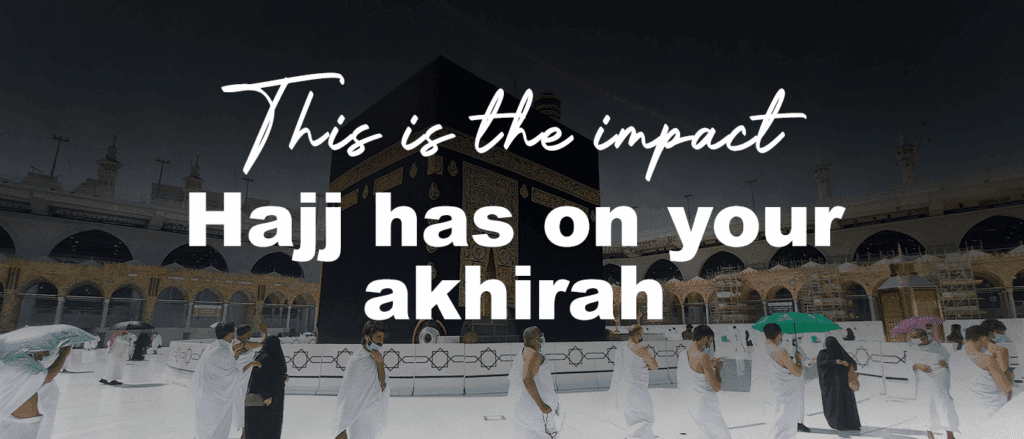
Every year, millions of Muslims leave behind their homes, their routines, and their identities to answer a call that began with Prophet Ibrahim (AS) and was sealed by our beloved Prophet Muhammad (SAW). They don the same simple white cloth. They walk the same ground, and they say the same words, “Labbayk allahumma labbayk, here I am, O Allah, here I am.” However, some believe that the barakah of Hajj stops when the pilgrimage ends. That is a mistake. In many ways, it begins when you return home. If Allah (SWT) accepts your Hajj, you return as a different person. You feel lighter. Your heart feels more alive in prayer. You become more conscious of your words, your gaze, and your time. The sweetness of dhikr lingers on your tongue. The dunya loses its grip on you. And the akhirah begins to feel closer. This transformation is real. Hajj works on the heart, deeply and permanently, because Allah (SWT) created it as a path to purification, and He (SWT) never leaves the sincere heart unchanged. Many delay Hajj waiting for the stars to align. They want more money, they want more time, they want to be completely sure about their decision. But the moment when all of those boxes are checked rarely arrives. In reality, if you have a burning urge to make the pilgrimage of a lifetime, that is your sign! That quiet restlessness in your heart? That’s your soul recognizing the call. When Allah (SWT) invites you, He (SWT) makes the impossible easy. When you move toward Him, He (SWT) opens doors you didn’t even know existed. One of the most profound teachings about Hajj is also one of the simplest. The Prophet (SAW) said, “Whoever performs Hajj for Allah (SWT)’s pleasure and does not commit any obscenity or transgression will return as pure as the day his mother gave birth to him.” (Sahih Muslim) If your Hajj is accepted, your entire record of sins is erased. Not just major sins. Not just the past year. Everything. You return to Allah (SWT) with a blank slate. Think about that for a moment, what would you give to stand on the Day of Judgment with no sins on your record? Hajj gives you that opportunity. In another famous hadith by the Prophet (SAW), he (SAW) says, “An accepted Hajj has no reward but Paradise.” (Sahih Muslim) Imagine that. Jannah, which is the highest reward, is promised to the one whose Hajj is sincere and accepted. But what are the signs of Hajj mabroor? According to scholars, the accepted Hajj is one that is: Performed with pure intentions for Allah (SWT). Done without major sins during the journey. Followed by positive change in character afterward. This means your actions after Hajj matter! The transformation Hajj brings must continue beyond Makkah. And if it does and Allah (SWT) accepts it, you’ve been given a pathway straight to Jannah. One of the most striking things about Hajj is how closely it resembles the scenes we will witness on Yawm al Qiyamah. Men wear white, unstitched garments like the burial shroud. We stand in crowds on Arafah, pleading for forgiveness. We carry nothing of status such as titles, wealth, or power. We are seen by Allah (SWT) fully, honestly, and stripped of all pretense. But, unlike the Day of Judgment, in Hajj, we have the chance to change our outcome. We beg for mercy now, before it’s too late. And the Prophet (SAW) said, “There is no day on which Allah frees more people from the Fire than the Day of Arafah.” (Sahih Muslim) On that day, Allah (SWT) descends to the lowest heaven in a way befitting His majesty, and He (SWT) boasts to the angels about His servants gathered in humility. He (SWT) forgives, showers mercy, and writes names in the Book of the Saved. A big part about Hajj is preparing your heart for the akhirah. After Hajj, something changes in a person who went with sincerity. You start to: Pray more mindfully. Remember death more often. Prioritize the akhirah over this fleeting dunya. In other words, Hajj reorients your entire life toward what actually matters and that’s exactly the mindset you’ll need when your soul leaves this world. Allah (SWT) says in Surah Al-Baqarah, “Whatever good you do, Allah fully knows of it.” (The Clear Quran®, 2:197) Every tear, every dua, every tawaf, every step in Mina, Allah (SWT) saw it. And on the Day of Judgment, those moments may be what tip your scale. When the scales are weighed, and the book of deeds is opened, you’ll be thankful for every sincere moment you spent in ihram. You’ll remember standing on Arafah, hands trembling, heart open, begging your Lord. And maybe, just maybe, Allah (SWT) will say, “I have forgiven you. Your Hajj was accepted.” May those of us who have completed Hajj find it accepted and may those of us still eagerly awaiting our invitation be called soon and find it, too, accepted. Ameen!
If compassion had a name, it would be Lady Zaynab bint Khuzaymah
In the vast and luminous history of Islam, there are names that shine brightly. Names that echo from minbar to minbar, remembered in khutbahs, biographies and classrooms. Yet, among them, there are some who remain less spoken about, not because their virtue was any less, but because their time was brief and their presence understated. One such noble figure is Lady Zaynab bint Khuzaymah, and she was a woman of immense compassion, remarkable dignity, and a legacy that continues to touch hearts centuries later. Long before she became a Mother of the Believers, Lady Zaynab bint Khuzaymah was already well-known among the Arabs for her boundless generosity. She was so committed to the service of the needy that she earned the title “Umm al-Masakin” (Mother of the Poor), a name that wasn’t merely honorary, but deeply earned through years of active support for the vulnerable. Even in the pre-Islamic society of Jahiliyah, when the norms were not kind to the weak, Lady Zaynab bint Khuzaymah still stood out. She would feed the hungry, clothe the poor, and visit the ill without seeking reward or recognition. It was as if Allah (SWT) was preparing her soul for the responsibility of being a wife to the greatest man to walk this earth: Prophet Muhammad (SAW). Lady Zaynab bint Khuzaymah became one of the wives of the Prophet (SAW) in the third year after hijrah, around the age of 30. She was widowed twice before (her first husband was likely killed in battle), and she came into the life of the Prophet (SAW) at a time when many of the early Muslim women were suffering great loss due to war and persecution. Her marriage to the Prophet (SAW) was a continuation of her life’s mission, and that was to serve. The Prophet (SAW) married her not only out of compassion but also as a way to honor her noble character and offer her stability. It is worth remembering that many of the Prophet (SAW)’s marriages were acts of social reform, setting an example for the Ummah on how to care for widows and vulnerable women. Lady Zaynab bint Khuzaymah’s time with the Prophet (SAW) was brief. She passed away just eight months after their marriage. But her short tenure as Mother of the Believers did not diminish her standing. In fact, she holds the unique position of being the first of the Prophet (SAW)’s wives to die after him, and to be buried in Jannat ul Baqee. It’s easy to overlook someone whose time in the limelight was so short. But Lady Zaynab bint Khuzaymah’s legacy doesn’t need decades to leave a mark. Her life teaches us that impact is not measured by duration, but by depth. How many of us will be remembered generations later simply for the mercy we showed others? How many of us would even put the welfare of the less fortunate before our own needs and desires? In a world that often glorifies wealth and visibility, Lady Zaynab bint Khuzaymah reminds us that, in the eyes of Allah (SWT), it is compassion, service, and sincerity that truly matter. She lived quietly, loved deeply, and gave endlessly – not for fame, but for the pleasure of her Lord. When was the last time we ever lived our lives in such a way? In our communities today, the poor and the vulnerable still exist. The single mothers, the widows, the orphans, the homeless, all of them are modern masakin. If Lady Zaynab bint Khuzaymah were alive today, there is no doubt she would be among them, not just offering words, but extending her hand, her home, and her heart. For Muslims seeking to live meaningful lives, her legacy offers a clear example, and that is: do not wait for a platform to start giving. Your home, your presence, and your sincerity are enough to make a lasting impact. And perhaps most profoundly, Lady Zaynab bint Khuzaymah’s story tells us that you don’t have to be famous to be remembered by Allah (SWT). It is time that we, as an Ummah, revive the memory of Lady Zaynab bint Khuzaymah. Let us speak her name in our homes, teach her story in our schools, and embody her character in our daily lives. Let us honor her by doing what she did best, and that was serving those who have less, without expectation. In her quiet way, Lady Zaynab bint Khuzaymah lived a life of true Islamic excellence, one rooted in mercy, sacrifice, and love for others. May Allah (SWT) be pleased with her and allow us to walk in her footsteps, Ameen!